

You’re outside on a Sunday afternoon and you hear it — a grinding sound coming from the equipment pad. Or maybe it’s a hum that wasn’t there last week. Or a high-pitched whine that kicks in every time the pump cycles on.
Your first instinct is probably to wonder if you should be worried. The short answer: yes, pay attention — but don’t panic. Most pool pump noises are your equipment telling you something specific, and knowing what to listen for can be the difference between a straightforward repair and an expensive emergency.
Why You Shouldn’t Ignore a Noisy Pool Pump
A pool pump is the heart of your pool’s circulation system. It pulls water through the skimmer and main drain, pushes it through the filter, and returns it to the pool — continuously, all day. In South Florida, where pools run year-round and Florida’s heat pushes that equipment hard, pumps work overtime.
When a pump starts making unusual noise, something in that process has changed. Ignoring it rarely makes the problem smaller. A grinding pump that could have been repaired with a bearing replacement can turn into a full motor failure within weeks. A humming pump that won’t run often means the motor is straining and drawing excess current — which can burn out the windings, the most expensive part of the unit, and occasionally trip a breaker or cause electrical issues.
The good news: most noises have a clear pattern. Understanding what you’re hearing helps you describe the problem accurately and get it fixed faster.
The 5 Most Common Pool Pump Sounds — and What They Mean
1. Grinding or Metal-on-Metal Scraping
What it sounds like: A grating, metallic noise — like someone dropped a handful of gravel into a blender. It may start intermittently and get progressively worse.
What it usually means: The bearings in your pump motor are failing. Bearings are small metal rings that allow the motor shaft to spin freely. Over time — especially with exposure to South Florida’s humidity, hard water mist, and heat — they wear down, corrode, and begin to grind against the shaft.
This is one of the most common noises pool owners call about, and it’s also one that escalates quickly. Once a bearing starts grinding, metal shavings can contaminate the motor windings and lead to full motor failure in a matter of weeks.
In some cases, a motor replacement (rather than full pump replacement) is the right call if the pump housing is still in good shape. A technician can assess whether the pump itself is worth keeping.
What you can do: Turn the pump off and listen for the noise pattern. Note whether it happens immediately at startup or kicks in after a few minutes. That timing detail helps a technician narrow down the cause quickly.
2. Loud Humming with No Water Movement
What it sounds like: The pump sounds like it’s trying to start — a steady, loud electrical hum — but water isn’t flowing and the pump doesn’t seem to be doing anything.
What it usually means: One of two things. Either the motor capacitor has failed (the capacitor is what gives the motor its initial burst of power to get spinning), or the impeller is jammed with debris.
The capacitor issue is common in South Florida because the combination of heat and year-round operation wears them out faster than in seasonal climates. A failed capacitor means the motor hums but can’t generate enough torque to start spinning.
A jammed impeller — the spinning component that moves water — is often caused by leaves, sand, or small debris getting past the pump basket. If the impeller can’t rotate, the motor strains against the blockage and hums without producing water flow.
What you can do: First, check your pump basket and skimmer baskets. If they’re packed with debris, that’s worth clearing before you call anyone. If the baskets are clean and the pump still hums without running, that’s a job for a technician.
3. Gurgling, Sucking, or Cavitation Noises
What it sounds like: A wet, sloshing, bubbly sound — like the pump is trying to pull through air instead of water. Sometimes accompanied by the water level in the pump basket appearing foamy or bubbly.
What it usually means: The pump is cavitating — pulling in air along with water, or not getting enough water to prime properly. This is almost always a suction-side issue: an air leak somewhere between the skimmer and the pump inlet. Common sources include a cracked pump lid, a worn lid O-ring, a loose union fitting, or a partially blocked suction line.
Cavitation sounds harmless, but it’s genuinely destructive to the impeller over time. Running a pump that’s not fully primed causes the impeller to spin against air rather than water, which generates excess heat and wears down the component faster.
In South Florida pools, this can also happen when water levels drop too low — particularly after heavy evaporation during summer heat or after a few weeks of no rain. Before assuming a mechanical issue, check that your pool’s water level is at the middle of the skimmer opening.
What you can do: Inspect the pump lid and O-ring for visible cracks or debris. Check the water level in your pool. If both look fine and the noise continues, it’s likely an air leak in the plumbing that needs professional attention.
4. High-Pitched Whining or Screeching
What it sounds like: A piercing, squealing sound — sometimes consistent, sometimes intermittent. Higher-pitched than grinding, more electrical-sounding.
What it usually means: Worn motor bearings (similar to grinding, but in an earlier stage), a failing shaft seal, or in some cases, a motor that’s running at an incorrect voltage. If the screeching happens specifically on startup and then fades, that’s often a motor bearing that needs lubrication or replacement. If it’s constant, the bearings may already be failing more seriously.
A damaged shaft seal — the seal between the motor and the wet end of the pump — can also produce a high-pitched sound, especially if it’s beginning to allow water into the motor housing. Water intrusion into the motor is a serious problem and will accelerate failure significantly.
What you can do: Note whether the sound is present at startup only or continuous. Also look at the area around the pump motor for any moisture or water dripping — that would suggest a shaft seal issue and should be looked at promptly.
5. Rattling or Vibrating
What it sounds like: A loose, mechanical rattle — like something is vibrating against the equipment pad or the pump housing. Sometimes the pump itself visibly shakes during operation.
What it usually means: Loose mounting hardware or a mounting pad that’s deteriorated. Pool pumps are bolted to a pad or mounting bracket; over years of operation (and in Florida’s heat, which expands and contracts materials constantly), those mounts can loosen. Vibration is rarely a sign of internal failure on its own — but running a vibrating pump long-term can loosen pipe connections and eventually cause plumbing leaks.
Less commonly, rattling can come from debris inside the pump housing or a slightly loose impeller nut.
What you can do: Look at how the pump is mounted. If you can see loose bolts or a cracked rubber mounting pad, that’s something a technician can address quickly. Don’t try to tighten pump mounting hardware yourself if you’re not familiar with pool plumbing — over-tightening can crack PVC fittings.
Before You Call a Technician: Quick Checks
Not every pump noise requires a service call right this second. Here’s a short checklist of things you can confirm before picking up the phone:
- Water level: Is it at the mid-skimmer level? Low water causes air ingestion and cavitation.
- Pump basket and skimmer baskets: Are they clear of debris? A packed basket restricts flow significantly.
- Pump lid and O-ring: Is the lid fully seated? Is the O-ring visibly cracked or dried out? A degraded O-ring is a $10 fix if caught early.
- Valve positions: Are all suction and return valves fully open? A partially closed valve creates restriction that can mimic cavitation sounds.
If you’ve checked all of the above and the noise continues, it’s time to have a professional take a listen. Equipment issues diagnosed early almost always cost less to fix than ones that are ignored until the pump fails completely.
The team at Near Me Pools handles equipment reviews across Broward and Palm Beach County — if you’re not sure what you’re hearing, we’re happy to come take a look.
When Pump Noise Means It’s Time to Replace, Not Repair
This is the question most homeowners eventually land on: is it worth repairing, or should I just replace the whole thing?
Here’s a practical framework:
Consider repair if:
- The pump is less than 5 years old
- The pump housing and wet end are in good condition
- The issue is isolated — a capacitor, bearing, or O-ring
Consider replacement if:
- The pump is 5+ years old and has had multiple repairs
- The motor and wet end both have issues
- The pump is a single-speed unit and energy efficiency is a concern
That last point is worth highlighting: if you’re in South Florida and still running a single-speed pump, a variable-speed pump replacement is one of the most cost-effective equipment upgrades available. Variable-speed pumps run at lower RPMs for most of the day, which dramatically reduces energy consumption — and given how many months per year a Florida pool pump runs, the energy savings add up faster here than almost anywhere in the country.
If you’re on the fence, a local pool equipment technician can walk you through the options based on your specific equipment, its age, and what the repair would involve — giving you an honest answer rather than a default upsell.
What You Now Know
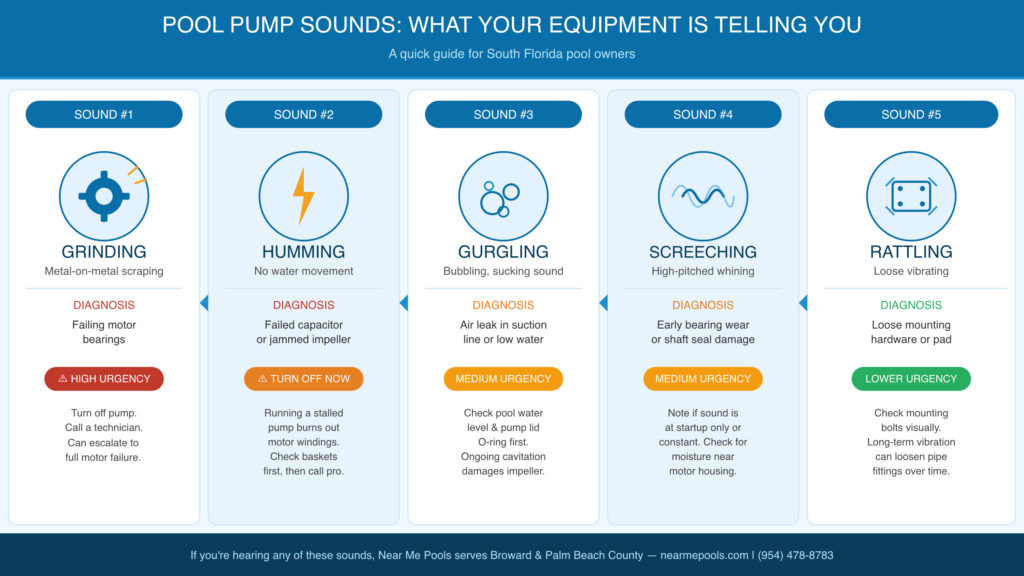
Pool pump noises are almost never random. Grinding points to bearings. Humming without flow usually means a failed capacitor or jammed impeller. Gurgling suggests an air leak. Screeching indicates early bearing wear or shaft seal damage. Rattling is often just loose hardware — easy to catch early if you’re paying attention.
The bigger takeaway: noises that get addressed early are almost always cheaper and faster to fix than noises that get ignored. Your pump is working hard in the South Florida heat, every day of the year. It’s worth listening.
We’re Here When You Need Us
If your pump is making a sound you don’t recognize, or you’ve worked through the checklist above and something still isn’t right, reach out to our team at Near Me Pools. We serve Broward County and parts of Palm Beach County and can review most equipment issues in a single visit.
Give us a call at (954) 478-8783 or email us at contact@nearmepools.com
Frequently Asked Questions
Why does my pool pump make a noise only at startup and then quiet down?
This is often a motor bearing that needs lubrication or is in the early stages of wear. Bearings tend to be noisiest when cold or when the pump first starts, then quiets down slightly as things warm up and expand. It doesn’t mean the noise is gone — it means the bearing is past its prime and will eventually fail. Worth having a technician assess before it gets worse.
Can I run my pool pump if it’s making a grinding noise?
A grinding pump is typically working with failing bearings, and the metal fragments that wear off can contaminate the motor windings, turning a bearing replacement into a full motor replacement. If you hear grinding, try to get it looked at immediately.
My pump hums but the water isn’t moving — should I turn it off?
Yes. A pump that’s humming but not running is drawing current while stalled, which generates heat inside the motor. Leaving it running in that state accelerates damage to the windings. Turn it off, check your pump basket and skimmer baskets for blockages, and call a technician if the issue persists after clearing any debris.
How do I know if my pool pump noise is a motor issue vs. a plumbing issue?
Noises that are mechanical, metallic, or electrical (grinding, humming, screeching) almost always originate in the motor or its components. Noises that are wet, sloshing, or gurgling are more likely suction-side plumbing issues — air leaks, low water level, or blockages. When in doubt, describe what you’re hearing and when it happens, and a pool technician can usually narrow it down quickly.
My pool pump is over 5 years old and making noise — should I just replace it?
Before investing in a repair, it’s worth getting a professional opinion on whether the rest of the unit is in reasonable shape. If the housing and wet end are sound, a motor replacement might make sense. If multiple components are showing wear, a full replacement — ideally to a variable-speed unit — is usually the smarter long-term investment. Contact Near Me Pools for an honest review of your equipment.