
You’re at a neighbor’s pool party and you notice the water feels different — silky, softer on your skin. No itchy eyes. No lingering bleach smell on your swimsuit when you get home. You ask what they’re doing differently and they say, pretty casually: “We switched to saltwater.”
That answer raises a hundred questions. Does saltwater mean no more chemicals? Is it less maintenance? Is it really better for your skin? And what does it actually take to convert a regular pool into a saltwater pool?
If you’re a South Florida homeowner who has been curious about making the switch, here’s a plain-English guide to how saltwater pool systems actually work — including the things most people get wrong.
The Big Misconception: Saltwater Pools Still Have Chlorine
Let’s clear this up first, because it’s the source of most confusion about saltwater pools.
A saltwater pool is not a chlorine-free pool. It’s actually a chlorine pool — just one that generates its own chlorine rather than requiring you to add it manually every week. The difference is in how the sanitizer gets into the water, not whether it’s there at all.
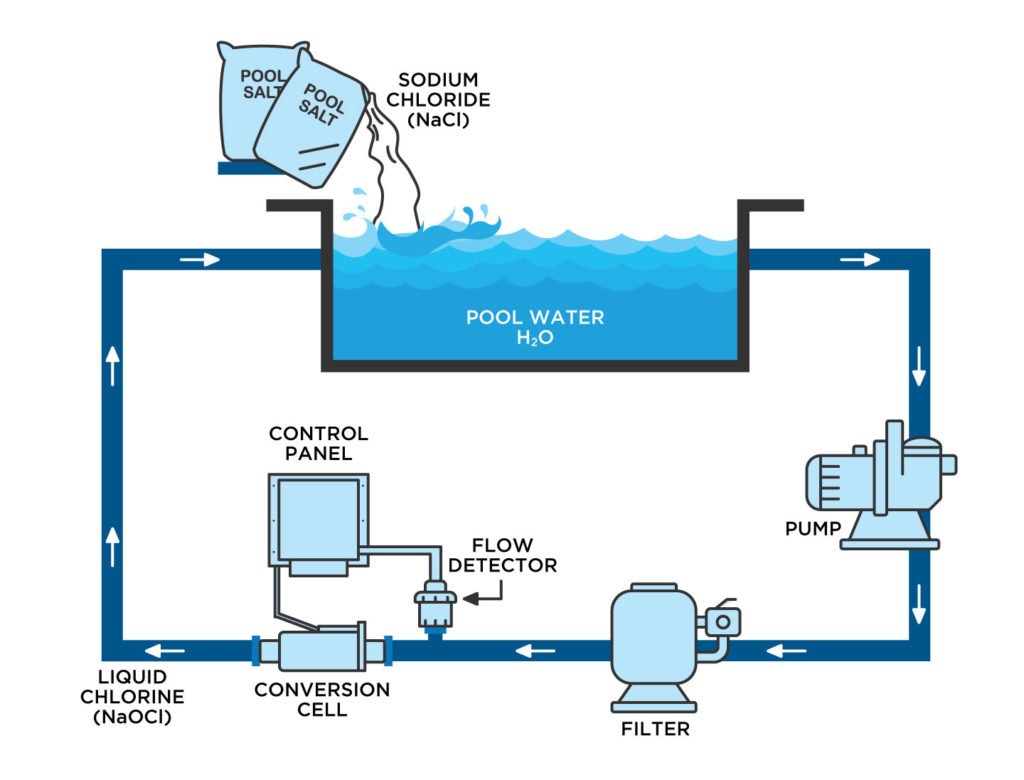
Here’s the basic process: You add pool-grade salt (sodium chloride) to your water — about 2,700–3,400 parts per million, which is far less salty than ocean water and barely detectable to most swimmers. That salt-infused water flows through a device called a salt cell (also called a chlorine generator or salt chlorinator), which is installed in your equipment line. Inside the cell, a process called electrolysis splits the salt molecules into their component parts — including hypochlorous acid, which is the same active sanitizer found in traditional liquid or granular chlorine.
The chlorine does its job in the water, then reverts back to salt, cycles through the cell again, and the process repeats continuously.
So Why Does It Feel So Different?
If the chemistry is fundamentally the same, why do saltwater pools consistently feel better to swim in?
A few reasons. The chlorine produced by a salt cell is continuously generated at a low, consistent level rather than spiked in large doses after a weekly shock treatment. With traditional chlorine pools, water chemistry tends to swing — high chlorine right after treatment, lower between doses. Saltwater systems maintain a steadier baseline, which is gentler on skin, eyes, and hair.
Also, the mild salinity itself contributes to the soft, silky feel of the water. It’s similar to why ocean water feels different on your skin than a fresh water lake — even at much lower concentrations.
What a Saltwater Conversion Actually Involves
Converting an existing pool to saltwater is not a massive renovation. It’s primarily an equipment installation — but it does involve a few moving pieces, and the work should be done by a qualified pool technician.
What Gets Installed
The core addition is the salt cell and its control board, which typically mounts inline on your return plumbing between the filter and the pool. The control board is what lets you adjust chlorine output levels and monitor the cell’s status. Depending on your existing equipment, you may need minor plumbing work to integrate the cell correctly.
Adjusting the Water Chemistry
Before going live, your pool’s water chemistry needs to be balanced for a saltwater system. Salt needs to be added to reach the target parts-per-million level for your specific cell model, and your pH, alkalinity, cyanuric acid (stabilizer), and calcium hardness need to be at the right baseline. Starting with balanced water extends the life of the salt cell and protects your pool surface.
What Doesn’t Change
Your pump, filter, heater, and other equipment stay exactly as they are. The salt system works alongside your existing setup — it just replaces the job of manually adding chlorine. You’ll still run your pump on a schedule, maintain your filter, and monitor your pool’s water chemistry.
If you’re curious what that installation process looks like in practice, the team at Near Me Pools can walk you through what’s involved for your specific pool setup.
The Salt Cell: What It Does and How to Keep It Running
The salt cell is the engine of your saltwater system — and like any equipment, it needs attention to stay effective.
How Long Does a Salt Cell Last?
A quality salt cell typically lasts 3–7 years in South Florida conditions. That’s a wide range because lifespan depends significantly on how well the cell is maintained, how hard your water is, and how aggressively you run it. South Florida’s water is notably high in calcium and minerals, which means scale can build up on the cell’s internal plates faster than in softer-water regions.
Cleaning the Cell
Calcium scale on the cell plates reduces chlorine production efficiency. The first sign is usually that your pool starts looking a little hazy or your chlorine readings drop lower than expected, even though the cell is running.
A pool technician can inspect the cell and clean off scale buildup using a diluted acid rinse — this is routine maintenance that extends cell life significantly. Basic rinsing with a garden hose is something you can do yourself, but the acid cleaning process involves chemicals and should be handled professionally.
Watching for Error Codes
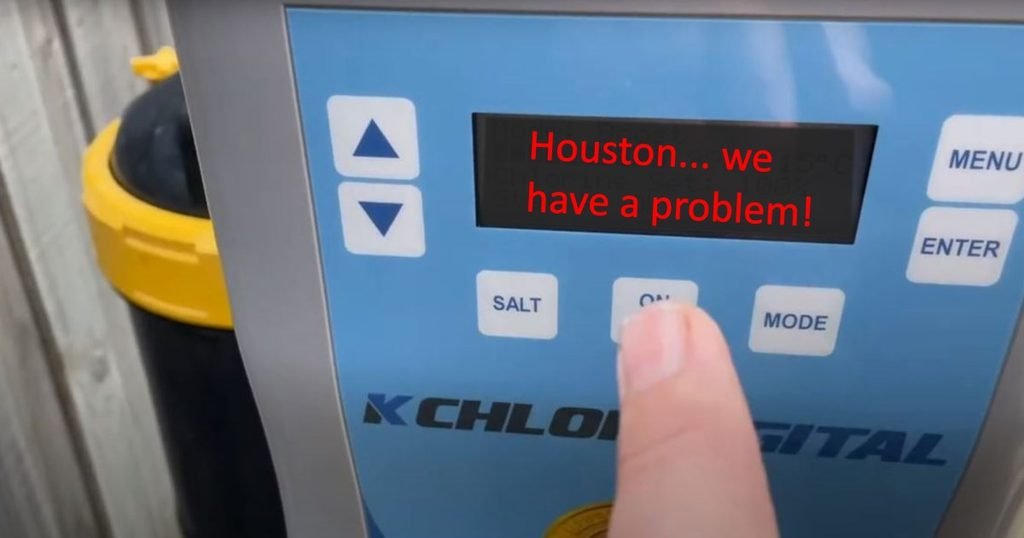
Most salt system control boards display an alert when the cell needs attention, the salt level is off, or the cell is at the end of its service life. Common displays include “inspect cell,” “low salt,” or “check salt.” These aren’t panic situations — they’re your system’s way of asking for a look. A technician can read the codes, test the cell’s output, and tell you whether you need a cleaning, a recalibration, or a replacement.
Is a Saltwater Pool Right for Every South Florida Pool?
For most South Florida homeowners, the answer is yes — but there are a few considerations worth knowing before you commit.
Plaster and Surface Compatibility
Saltwater systems are compatible with all modern pool surfaces, including plaster, pebble tec, and quartz finishes. If your pool surface is aging or in poor condition, converting to saltwater isn’t the right first step — addressing the surface comes first. Maintaining proper chemistry is especially important in a saltwater pool because imbalanced water can accelerate surface wear.
Metal Components and Fixtures
Salt and metal don’t always coexist well over time. If your pool has older metal fittings, decorative handrails, or a heater that isn’t rated for saltwater compatibility, those components may show accelerated corrosion. A good technician will assess your equipment before recommending a conversion.
Existing Pool Age
Saltwater systems work well with pools of all ages. That said, if you’re already planning renovations — resurfacing, new tile, equipment upgrades — it can make sense to bundle the saltwater conversion in at the same time rather than doing multiple rounds of work.
What a Saltwater Pool Still Requires: Managing Expectations
One of the biggest misconceptions about saltwater pools is that they’re fully self-maintaining. They’re not — but they do reduce the weekly chemical management significantly.
You’ll still need to monitor and balance:
- pH — Saltwater pools tend to drift slightly alkaline over time, so pH monitoring is still a regular task
- Alkalinity — Keeps your pH stable; needs periodic adjustment
- Cyanuric acid (stabilizer) — Protects chlorine from UV degradation in South Florida’s intense sun; needs to stay in range
- Calcium hardness — Especially important in South Florida’s hard water to prevent scale on the cell and protect your surface
- Salt level — Check periodically; the system will alert you if it drops out of range
What you largely eliminate is the hands-on addition of chlorine week after week. The salt cell handles that job automatically. That’s a real and meaningful reduction of ongoing maintenance work — but it doesn’t mean the pool runs without any oversight.
Ready to Make the Switch?
A saltwater pool isn’t magic — but it is a genuine quality-of-life upgrade for most South Florida homeowners. Softer water, less hands-on chemical work, and a system that maintains a steadier chlorine level day-to-day are real advantages. The upfront investment is primarily the equipment installation, and the ongoing difference you’ll notice most is what you’re no longer doing every week. Here’s a quick comparison chart to help you make youre decision:
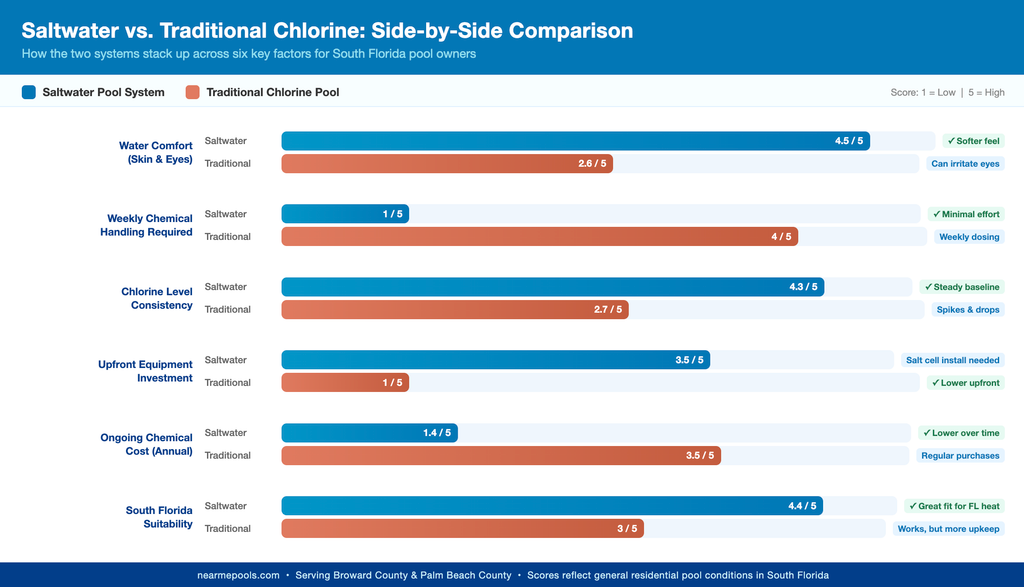
If you’re weighing whether a saltwater conversion makes sense for your pool, the team at Near Me Pools can look at your existing setup and give you a straight answer. We install and service saltwater systems throughout Broward County and parts of Palm Beach County.
Reach out to our team, give us a call at (954) 478-8783, or email us at contact@nearmepools.com — we’re happy to take a look at your current setup and help you decide if now’s the right time to make the switch.
Frequently Asked Questions
Is a saltwater pool the same as swimming in the ocean?
Not at all. Ocean water is about 35,000 parts per million (ppm) of salt — enough to sting your eyes and taste strongly. A saltwater pool runs at roughly 2,700–3,400 ppm, which is so low that most swimmers can barely detect it. The water feels soft, not salty.
Do I still need to shock a saltwater pool?
Occasionally, yes. If your pool experiences heavy use, a big storm, or a water quality event (like algae starting to develop), a supplemental shock treatment helps the salt system catch up. It’s less frequent than with a traditional chlorine pool, but it’s still a useful tool in your maintenance routine.
How much salt do I need to add over time?
Once your pool is at the right salt level, you mainly replace what’s lost through backwashing, splash-out, and rain dilution. Most South Florida pools need a bag or two of salt added a few times per year to maintain levels — your salt system will alert you when it drops below the target range.
Can I install a saltwater system myself?
The actual installation of the salt cell, control board, and any plumbing integration should be done by a licensed professional. Improper installation can damage the equipment or void the manufacturer warranty.
What happens when the salt cell needs to be replaced?
Salt cells have a finite lifespan — typically a few years, depending on use and maintenance. When output drops and cleaning doesn’t help, it’s time for a new cell. Contact Near Me Pools if you’re seeing reduced chlorine production and want your system evaluated.
Will a saltwater system work with my existing pump and filter?
In most cases, yes. The salt cell installs inline with your existing plumbing, and your pump and filter continue to operate exactly as they do now. The main consideration is whether your heater (if you have one) is rated for saltwater compatibility — your technician can verify that before installation.