

You’ve been staring at your backyard pool for three years now — and it still looks exactly like it did when you moved in. The water is clean, the equipment works fine, but something’s missing. It’s a pool. It’s not a retreat.
That’s usually the moment pool water features enter the picture. A waterfall. A sheer descent. A bubbler on the sun shelf your kids actually beg to play in. These aren’t just decorative upgrades — they change how a pool feels to be around, how it sounds on a quiet evening, and honestly, how it photographs when you’re hosting a backyard dinner.
If you’re exploring pool water features for your South Florida home and wondering where to start, this guide breaks down every major option — what each one is, what it adds to a pool, and what’s involved in making it happen.
Why South Florida Pools Are Built for Water Features
South Florida pools are used differently than pools in most of the country. You’re not opening the pool in May and closing it in September — you’re in it year-round, often entertaining on the deck just as much as you’re swimming. That lifestyle creates a different set of priorities.
Water features address something specific to outdoor living in this climate: the sensory experience of your backyard. The sound of moving water masks road noise and neighbor noise. A waterfall creates an ambient backdrop for conversation. Bubblers give kids something to interact with beyond just swimming. And visually, moving water catches South Florida’s intense sunlight in a way that still water simply doesn’t.
There’s also the practical side. Water features improve water circulation, which can help with algae control in the high-heat, high-UV conditions of Broward and Palm Beach counties. It’s not a replacement for proper chemical maintenance — but it’s a quiet benefit worth knowing about.
The Main Types of Pool Water Features
Every water feature is a little different in terms of what it looks like, what it sounds like, and what it takes to add one to an existing pool. Here’s a clear-eyed look at each major option.
Waterfalls
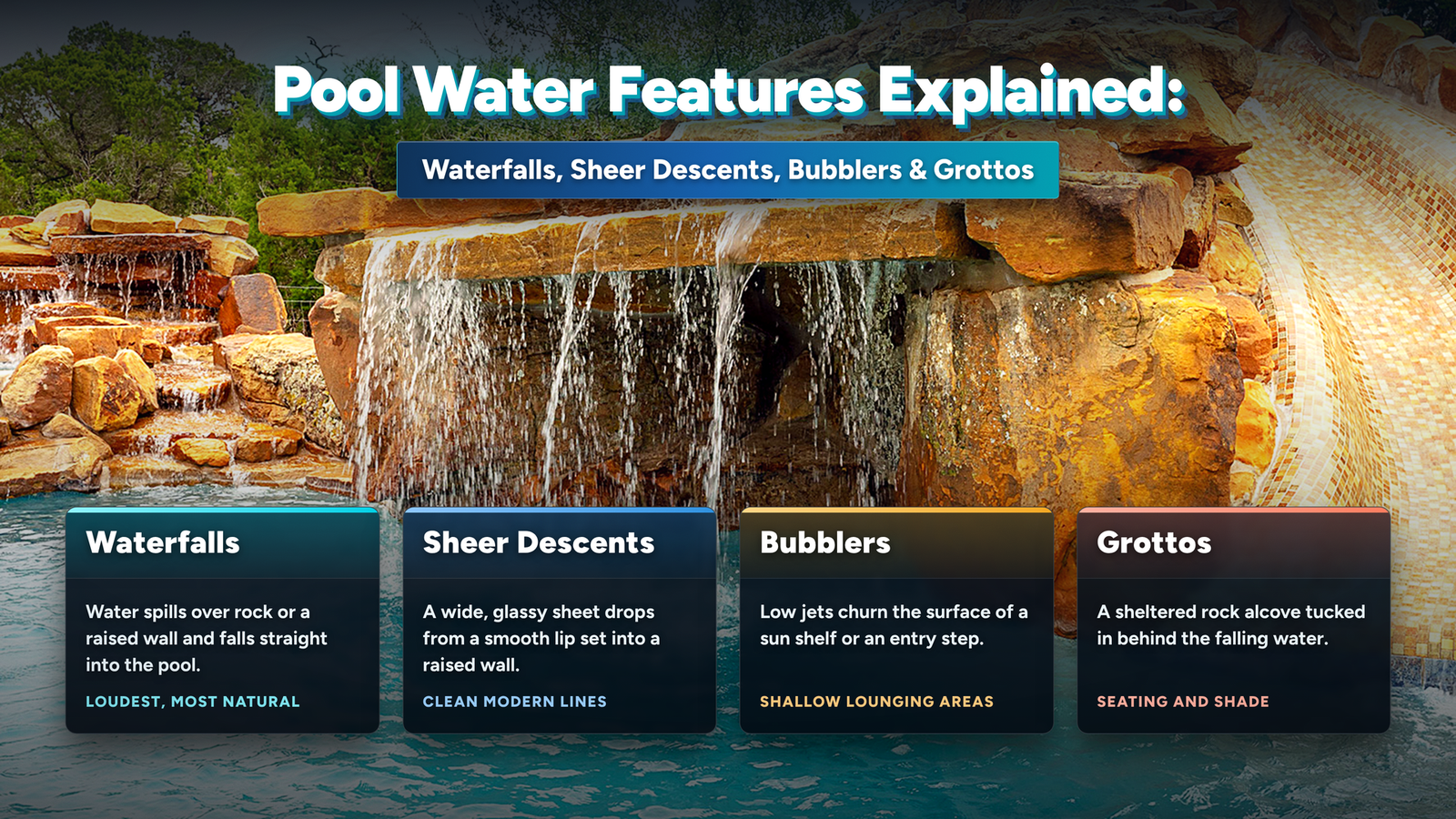
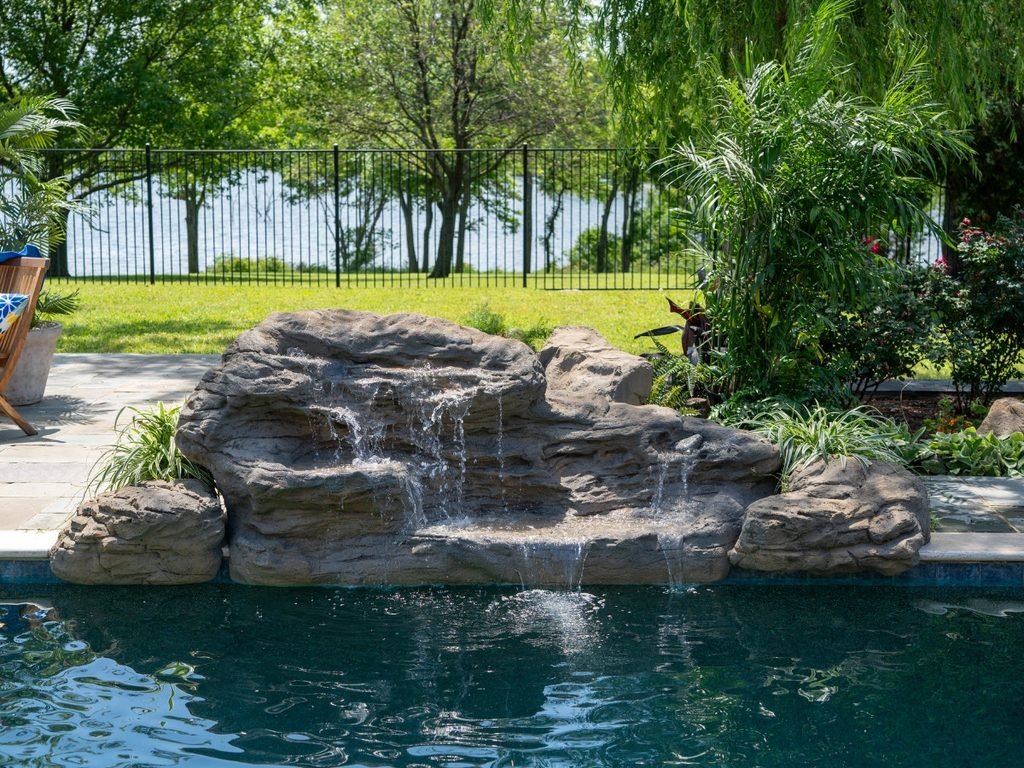
A pool waterfall is exactly what it sounds like: water spilling from an elevated structure down into the pool. What varies enormously is the form that structure takes.
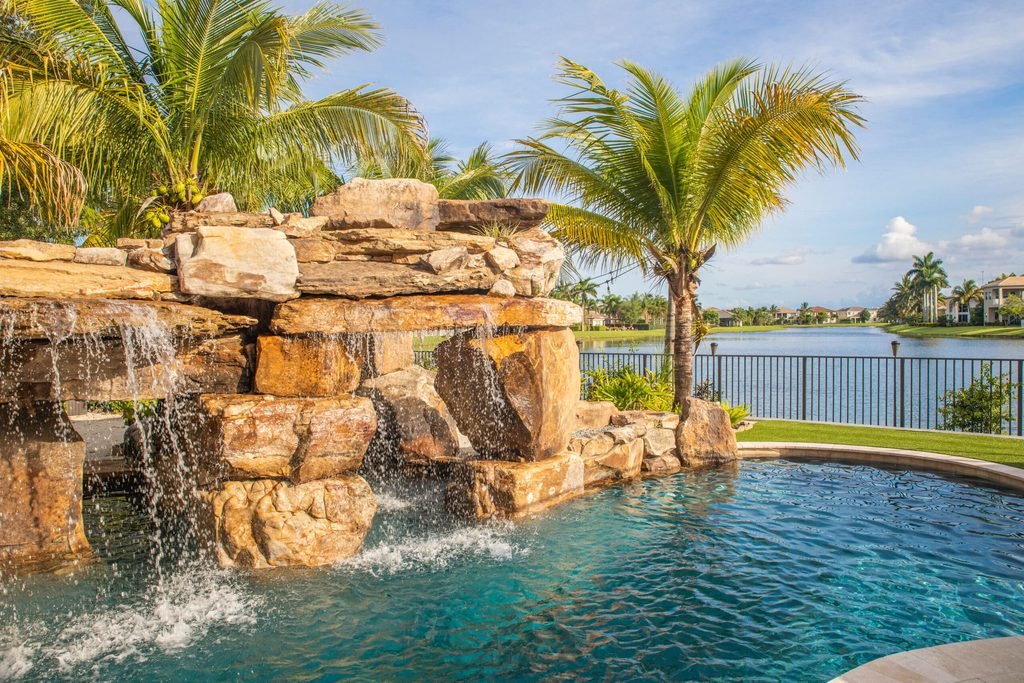
Natural-rock waterfalls use stacked stone or manufactured rock to create a grotto-like effect — water tumbling over irregular surfaces, often with plant life growing around the base. These are popular in South Florida luxury pools and create a resort-style ambiance. At the other end of the spectrum, modern pools often feature clean geometric waterfall walls — a raised bond beam or raised spa that spills over a flat edge into the main pool.
Waterfalls are among the most visually dramatic features you can add, but they’re also the most involved to install. The structure needs to integrate with the pool’s existing shell and plumbing, and natural-rock features in particular require skilled craftsmanship to look right. This is not a weekend project and not something that should be approached without a licensed pool contractor.
Sheer Descents
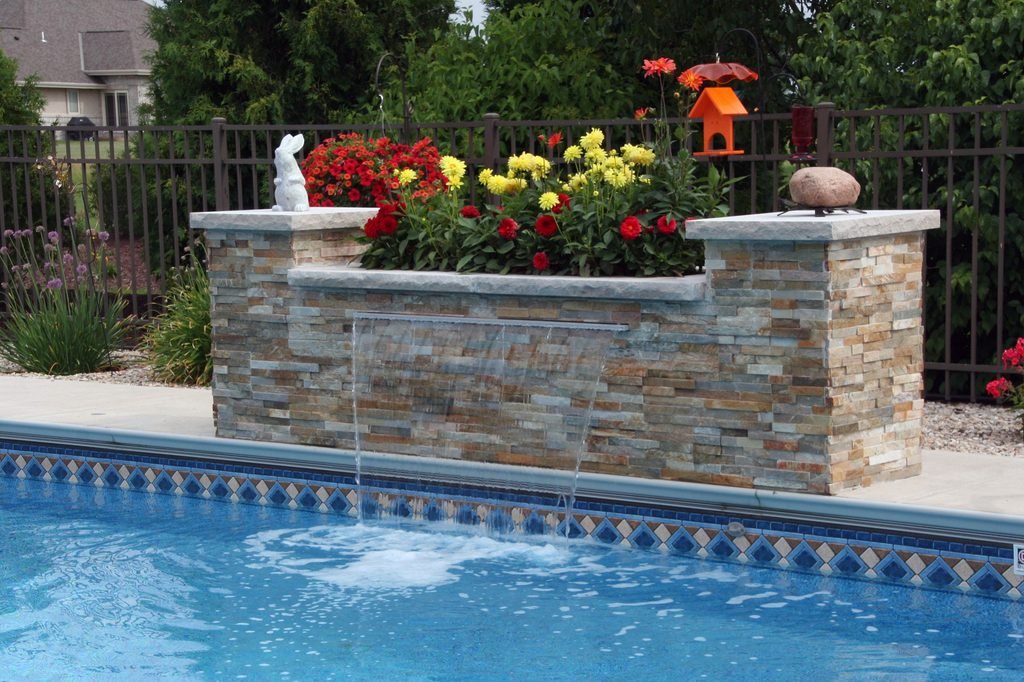
A sheer descent sends water in a smooth, glassy sheet — like a liquid curtain — rather than a cascading tumble. The effect is more contemporary and architectural than a natural-rock waterfall. A single sheer descent creates a narrow ribbon of water; multiple units placed side by side can span several feet and create a dramatic water wall effect.
Sheer descents are popular in modern and contemporary pool designs because they’re clean, elegant, and can be backlit for nighttime effect. LED lighting behind the water sheet creates a subtle glow that’s particularly striking after sunset — which, in South Florida, still means you’re enjoying your backyard in comfortable evening temperatures.
They’re also somewhat easier to retrofit than a full waterfall structure, since the unit itself is compact and mounts into an existing wall, raised spa, or bond beam. That said, your pool’s existing pump and plumbing capacity will need to support the additional flow — something a contractor will evaluate before installation.
Bubblers
Bubblers are one of the more underrated water feature options, and in South Florida pools they’ve become increasingly standard in new builds and renovations alike.
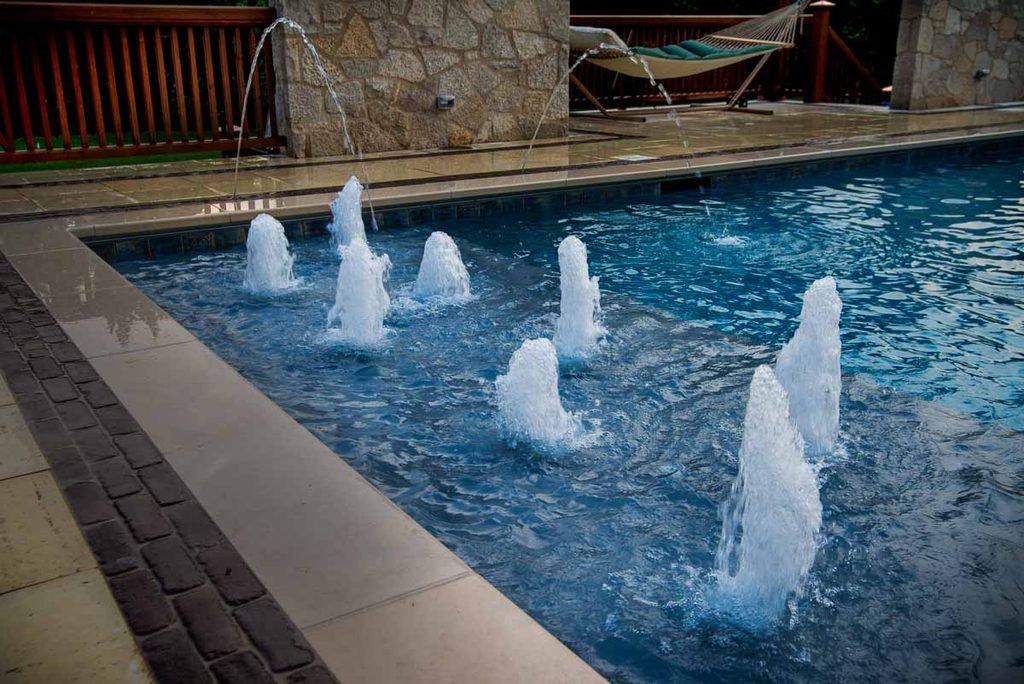
A bubbler is a small jet installed flush in the pool floor — typically on a sun shelf, tanning ledge, or step — that pushes water upward in a gentle fountain-like arc. They’re subtle. They’re interactive. Children in particular love them, and they add a soft, playful dimension to shallow water areas without overwhelming the space visually.
They’re also among the more straightforward features to incorporate, since they don’t require structural additions — just proper plumbing stub-outs and appropriate pump capacity. If your pool already has a sun shelf and you’re planning a renovation, bubblers are often easy to include in that scope of work.
Deck Jets
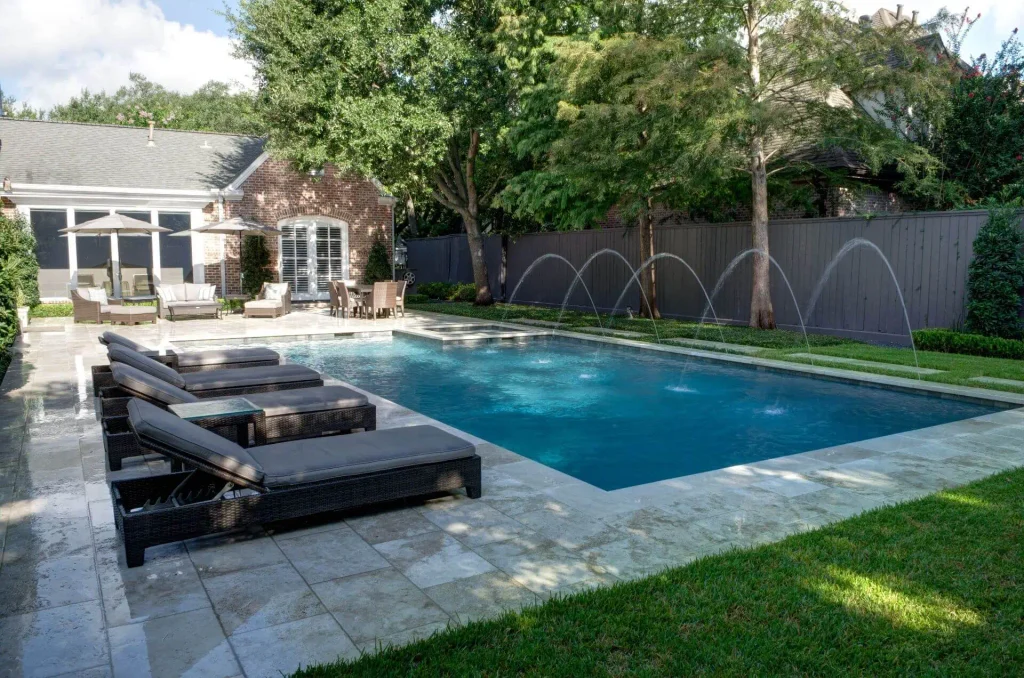
Deck jets are different from bubblers in that the water originates from the pool deck — not the pool floor — and arcs into the water in a graceful stream. Think of the classic laminar jets you see at theme parks, where the water flows in a clear, unbroken arc rather than a splash.
Deck jets are typically installed flush with the coping or deck surface and positioned to arc water a few feet into the pool. They work particularly well on pools with clean geometric lines, since the arcing streams reinforce the architecture of the space. Like bubblers, they can be fitted with color LED lighting for a dramatic nighttime effect.
Grottos
A grotto is the most dramatic — and involved — water feature a pool can have. It’s essentially a cave-like structure built into or adjacent to the pool, often with a waterfall cascading over its entrance and shallow water inside that you can actually swim or sit in.
Grottos are a statement. They require significant structural work, substantial space, and experienced contractors. They’re also exclusively associated with high-end, large-scale pool renovations — you’re not adding a grotto to a compact South Florida townhome pool. But for homeowners with the right space and the right vision, a grotto transforms a pool into something genuinely resort-caliber.
In South Florida, grottos are most common in larger lots in communities like Weston, Parkland, and Boca Raton — places where the scale of outdoor living space supports the feature. If this is on your radar, it’s the kind of project that warrants a serious planning conversation with a licensed pool renovation contractor long before any decisions are made.
Can You Add Water Features to an Existing Pool?
This is usually the first practical question homeowners ask — and the answer is: yes, in most cases, but with some important caveats.
Adding a water feature to an existing pool is not the same as building one into a new pool from scratch. The existing structure, plumbing, and equipment all become variables. Here’s what a contractor will typically evaluate:
Pump and circulation capacity. Every water feature needs flow — volume of water moving per minute. Your current pump may or may not support the additional demand. Some features (bubblers, sheer descents) can be served by a dedicated secondary pump. Larger features like natural-rock waterfalls may require a pump upgrade or a separate pump for the feature circuit entirely.
Structural integration. For waterfalls, raised walls, or grottos, the new structure needs to tie into the existing pool shell in a way that doesn’t compromise the structural integrity or waterproofing. This is highly contractor-specific — the quality of the integration matters enormously.
Permits. In Broward County and Palm Beach County, many pool additions and renovations require permits. Your contractor should pull the appropriate permits before any work begins.
Pool age and condition. If a pool is already showing signs of surface wear, cracking, or equipment issues, a water feature addition is often a good trigger to address those problems at the same time — rather than adding a feature to a pool that will need attention in a year or two anyway.
What to Think About Before Moving Forward
Before you start browsing waterfall photos on Instagram, a few honest considerations:
Your pool’s overall condition. A water feature is part of a bigger renovation picture. If your deck needs work, your tile is dated, or your surface is showing wear, it’s worth having a broader conversation about the full scope rather than adding a feature to a pool that needs more attention elsewhere.
How you actually use your pool. A grotto or dramatic waterfall makes sense for someone who entertains regularly and uses their pool as a lifestyle centerpiece. Bubblers and deck jets might be the right call for a family with young kids who use the pool daily and want interactive elements. Match the feature to how you live, not just how it looks in a photo.
The overall aesthetic. Water features look best when they feel like part of the pool’s design — not an addition bolted on afterward. A natural-rock waterfall on a contemporary pool with clean geometric lines can look mismatched. A sheer descent on a tropical resort-style pool can look sterile. Think about what already exists and what direction you’re going.
Noise level. Not all water features are equally loud. A large natural waterfall creates a consistent, ambient rush. Sheer descents are smoother and quieter. Bubblers are barely audible. If you have neighbors nearby or a preference for quiet evenings, this is a real consideration.
Water Features and Your Equipment
One topic that often surprises homeowners: water features affect your pool’s chemistry and equipment operation in real ways.
Evaporation increases. Moving water evaporates faster than still water — especially in South Florida’s heat and wind. If you run your water features frequently, expect to top off your pool water more often, which also means monitoring calcium hardness and TDS (total dissolved solids) more closely.
Chemical balance. More water movement generally means better off-gassing of chloramines and improved overall water quality, but the increased surface area can also accelerate chlorine burn-off. Keep an eye on your chemical levels if you add a feature that runs regularly.
Filter maintenance. More flow through the system means more work for your filter. This isn’t a problem — it’s just something to account for. Regular pool cleaning and maintenance becomes even more important once water features are part of the picture.
If you have questions about how a feature might interact with your existing equipment, that conversation is worth having with a knowledgeable pool professional before any work begins.
What You Now Know
Pool water features aren’t just luxury additions — they’re a meaningful way to change how a pool looks, sounds, and functions in your everyday life. Whether you’re drawn to the drama of a natural waterfall, the elegance of a sheer descent, the playfulness of bubblers, or the resort-caliber experience of a grotto, the right choice depends on your pool’s current setup, how you use the space, and the aesthetic direction you’re going.
The most important thing before moving forward: have a real conversation with a pool renovation contractor who can evaluate your existing pool and tell you what’s genuinely possible — not just what looks good in a rendering.
Thinking About Adding a Water Feature?
If you’re in the early stages of planning — or just trying to figure out what’s realistic for your pool — we’re happy to talk it through. Near Me Pools serves Broward County and parts of Palm Beach County, and while we’re always glad to share what we know, we’ll point you in the right direction no matter what you decide.
Get in touch with our team, give us a call at (954) 478-8783, or email us at contact@nearmepools.com. No pressure — just a straight conversation.
You can also learn more about us and the full range of pool services we offer in South Florida.
Frequently Asked Questions
Can I add a water feature to my existing pool, or does it have to be built into a new pool?
Most water features can be added to an existing pool, but the feasibility depends on your current plumbing, pump capacity, and pool structure. Simpler features like bubblers and sheer descents are generally easier to retrofit than full waterfalls or grottos. A licensed contractor will assess your existing setup before recommending what’s possible.
Which pool water feature is the most low-maintenance?
Bubblers and deck jets are typically the simplest to maintain — they have fewer moving parts and don’t involve large volumes of water. Natural-rock waterfalls require more upkeep, as debris can accumulate in the rockwork and algae can grow in areas with slower water flow.
Will a pool waterfall help with my pool’s water quality?
Moving water generally improves circulation and off-gassing, which can have a positive effect on water clarity. That said, it also increases evaporation and can accelerate chlorine burn-off — so you’ll want to monitor your chemical balance more attentively. It’s not a substitute for regular pool maintenance.
How do I choose between a waterfall and a sheer descent?
It comes down to your pool’s style and how you want the feature to feel. Natural waterfalls suit resort-style and tropical pools and create a more dramatic, audible presence. Sheer descents are sleek, quiet, and best suited to contemporary or modern pool designs. Think about the overall aesthetic of your backyard, not just the feature in isolation.
Do water features increase home value in South Florida?
Water features can add meaningful appeal to a property, particularly in a market where outdoor living spaces carry significant weight. The effect on value depends on the quality of the installation, how well it suits the home’s overall aesthetic, and local buyer preferences. It’s worth having that conversation with a real estate professional if property value is a primary motivation.
Near Me Pools serves pools across Broward County and parts of Palm Beach County. View our service area.