

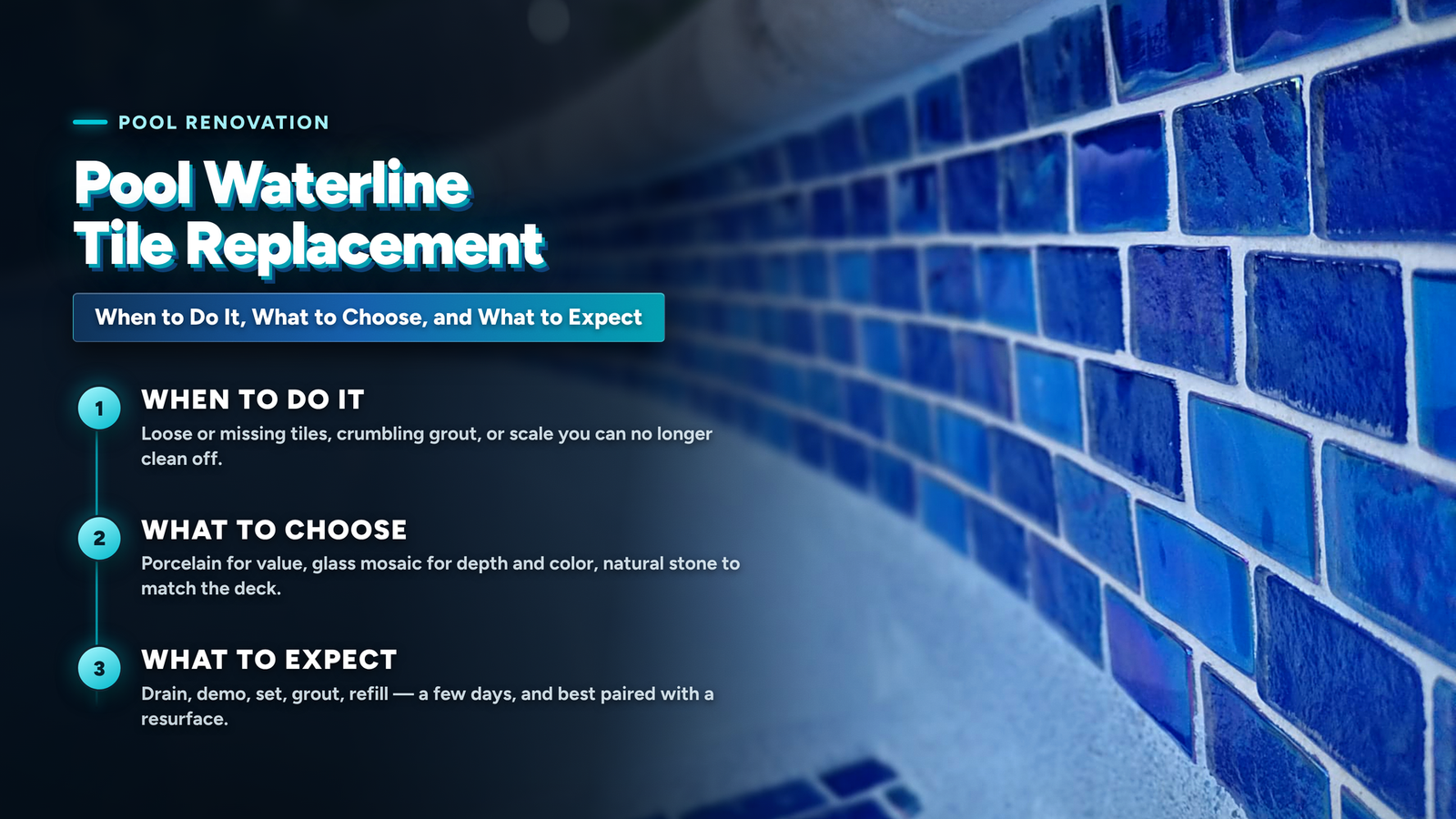
It starts as a small thing. A tile here and there that’s gone chalky white. A crack along the step. A grout line that no amount of scrubbing seems to bring back. You clean the pool every week and the equipment is fine — but the tile keeps pulling your eye, and not in a good way.
Waterline tile is one of those pool features that quietly defines how the whole pool looks. When it’s fresh, it frames the water and elevates the entire backyard. When it’s worn, chipped, or dated, it can make an otherwise well-maintained pool look tired no matter what else you do. And in South Florida — with our hard water, intense UV, and year-round chemical exposure — tile takes a beating faster than almost anywhere else in the country.
If you’ve been wondering whether it’s time to replace yours, here’s everything you need to know.
What Is Waterline Tile — and Why Does It Matter?
Waterline tile is the band of tile that runs around the interior perimeter of your pool, typically 6 to 12 inches wide, sitting right at the water’s surface. It also commonly extends onto pool steps, the spa wall, and any raised bond beams.
Its job is partly aesthetic — it’s one of the most visible features of a pool — but it also serves a practical purpose. That band of tile covers the transition zone where water, chemicals, air, and sunlight all meet simultaneously. It’s one of the harshest environments in your entire pool, and tile handles it better than plaster or any other finish material.
Which means that when that tile starts to fail, you notice it fast. And when you replace it with something beautiful, the transformation is immediate.
Signs Your Pool Waterline Tile Needs Replacing
Not every pool with a few stained tiles needs a full replacement. But certain signs are telling you the tile has genuinely reached the end of its useful life.
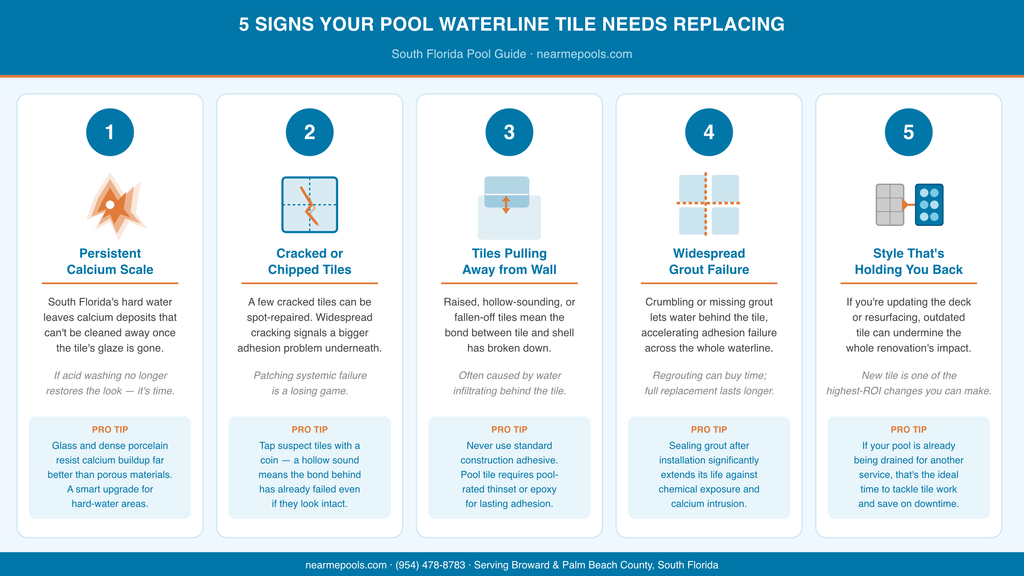
Calcium scale that won’t budge. South Florida’s water is notoriously hard. Over years of use, calcium carbonate deposits build up on tile and can become almost impossible to fully remove without damaging the tile surface itself. If you’ve had the tile acid-washed and the deposits keep coming back thicker than before, the tile’s protective glaze may be compromised.
Cracked or missing tiles. Individual tiles crack from freeze-thaw cycles (rare in South Florida but not impossible during cold snaps), impact, or shifting in the pool shell. A crack here and there can often be spot-repaired. But if cracking is widespread across multiple sections of the pool, it usually signals a larger adhesion problem — and patching becomes a losing game.
Tiles pulling away from the wall. When you see tiles that are slightly raised, hollow-sounding when tapped, or have fallen off entirely, the bond between the tile and the pool shell has broken down. This often happens when the thinset or mastic behind the tile has failed — sometimes from age, sometimes from poor installation, sometimes from water getting behind the tile and degrading the substrate.
Severely outdated style. Sometimes the tile isn’t failing — it’s just a time capsule from 1994. Small white 1×1 mosaics or busy geometric patterns from past decades can anchor a pool aesthetic in the wrong era. If you’re already planning a deck update or a full renovation, new tile is one of the highest-impact changes you can make per square foot.
Your Tile Material Options
This is where the fun part begins. Waterline tile comes in a range of materials, each with a distinct look, feel, price point, and maintenance profile. Here’s how the main options compare.
Glass Tile
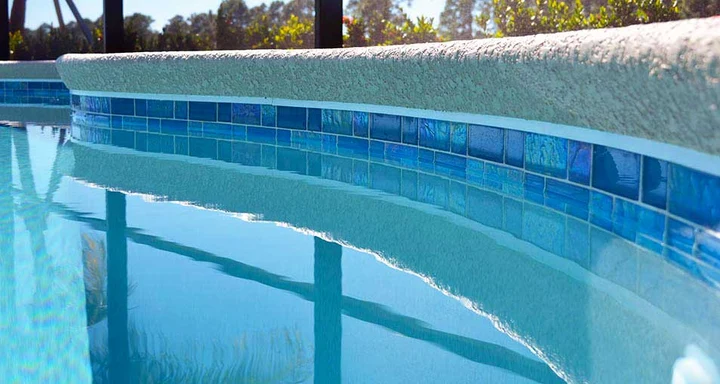
Glass tile is the premium choice — and in South Florida’s contemporary pool market, it’s increasingly the popular one. The material catches and reflects light in a way nothing else does. When sunlight hits a glass tile waterline, the shimmer and depth it creates in the water is genuinely striking.
Glass tile is also non-porous, which means it resists calcium buildup and chemical staining far better than more absorbent materials. It cleans up easily and holds its color longer under UV exposure.
The trade-offs: glass tile costs more than ceramic or porcelain, and it requires more skilled installation — the adhesive, grout, and technique all matter more when working with glass. But for homeowners who want a showpiece pool, it’s hard to argue with the result.
Ceramic and Porcelain Tile
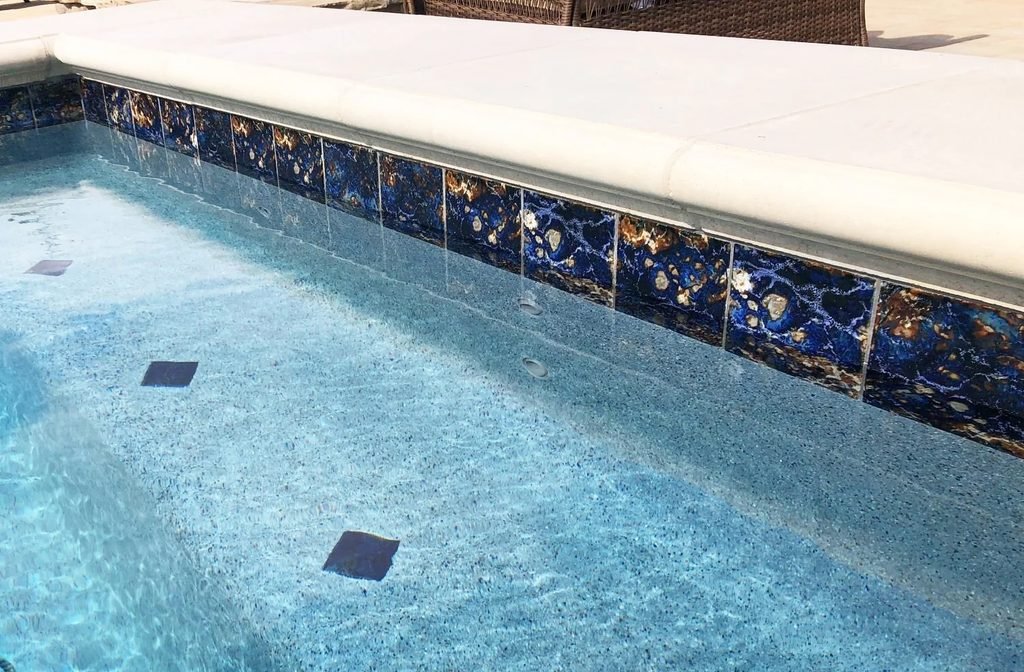
Ceramic and porcelain are the workhorses of pool waterline tile — durable, wide-ranging in style, and more accessible in price than glass. Porcelain in particular is very dense and low-absorption, making it well-suited for the chemical exposure of pool water.
The style range here is enormous. You can find everything from classic white subway-style tiles to contemporary large-format porcelain that creates a clean, almost seamless look at the waterline. For homeowners who want durability and flexibility without committing to the premium of glass, ceramic or porcelain is a solid choice.
Natural Stone Tile
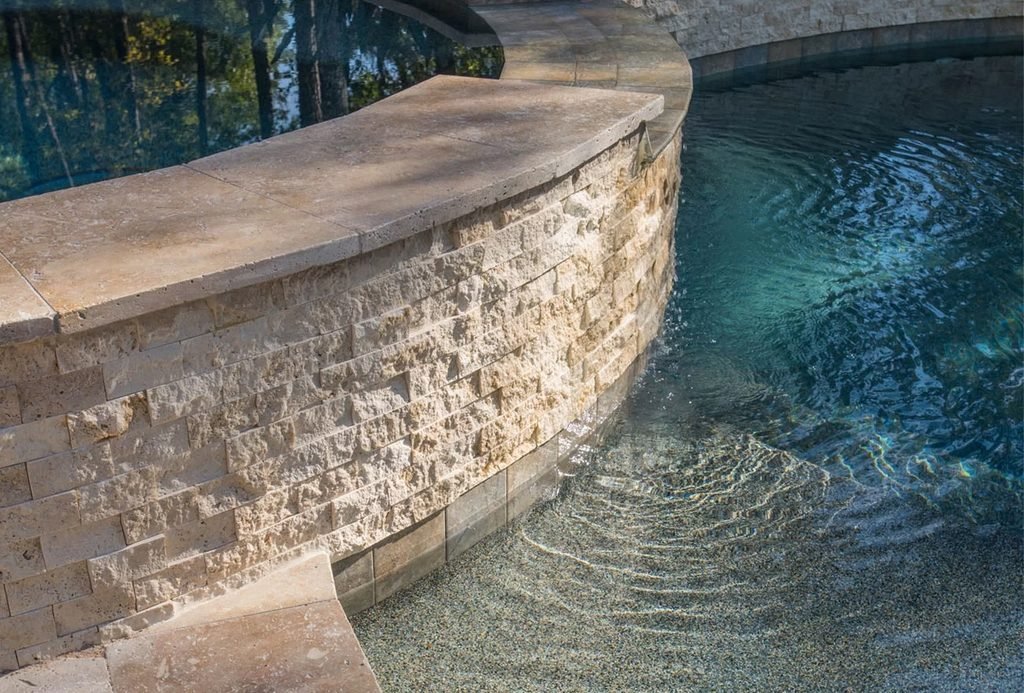
Travertine, marble, and slate make occasional appearances as waterline tile, particularly in high-end installations that want to carry a consistent stone theme from the deck into the pool itself.
Natural stone is beautiful, but it demands more maintenance in a pool environment. Stone is porous — it absorbs water and chemicals and can be more susceptible to staining and etching over time. If you’re drawn to natural stone, your installer will likely recommend a sealed, pool-rated variety and a stricter maintenance schedule to keep it looking right.
What South Florida Homeowners Should Factor In
Choosing pool tile anywhere involves trade-offs. In South Florida, a few specific conditions push those trade-offs in particular directions.
Hard water is your tile’s biggest enemy. Broward County water is calcium-rich. Over years of use, that calcium deposits on tile — especially on surfaces with any porosity or texture. Non-porous materials like glass and dense porcelain shed calcium buildup far more easily than textured or natural stone options. That’s worth real consideration when you’re choosing a material you’ll be maintaining for the next 15–20 years.
UV intensity fades pigment. Florida’s sun is relentless. Some tile colors and glazes hold up beautifully under constant UV exposure; others fade noticeably over five to ten years. Ask your installer specifically about UV stability for any tile you’re considering — especially deeper colors.
Year-round chemical exposure matters. Unlike pools in northern climates that are closed for half the year, South Florida pools run 12 months straight. That means tile is in contact with chlorine, salt, and chemical fluctuations year-round without a break. Higher-density materials stand up better over time.
What the Replacement Process Actually Looks Like
Pool waterline tile replacement is a job for a licensed professional. There’s no meaningful DIY path here — removing the old tile, preparing the substrate, and installing new tile correctly requires specialized equipment, materials, and experience. Done incorrectly, tiles pop off within months.
Here’s the general sequence of what happens during a waterline tile replacement:
1. Pool is drained — or lowered to expose the tile band. The extent of drainage depends on whether you’re replacing just the waterline strip or also the step and spa tile.
2. Old tile is removed — typically with a chipping hammer or chisel. This step also reveals whether the substrate beneath the tile is in good condition or needs repair before new tile goes down.
3. Substrate prep — the pool shell is cleaned, any compromised areas are patched, and the surface is prepared to accept new adhesive. This step is often where the quality difference between installers shows up most.
4. New tile is set — using pool-rated thinset or epoxy adhesive, the new tile is laid in sections. Glass tile often requires white adhesive rather than gray so it doesn’t affect the color appearance of the tile above it.
5. Grouting and sealing — grout is applied between tiles and sealed appropriately for the material chosen.
6. Pool refill and chemistry balancing — once the installation has cured, the pool is refilled and water chemistry is rebalanced before use.
Timeline depends on the scope: a waterline-only replacement on a standard residential pool typically takes a few days of active work, plus curing time before the pool can be refilled and used. Combining the tile work with a full resurfacing or renovation project — which many homeowners do, since the pool will already be drained — can streamline the overall schedule significantly.
A Natural Pairing: Tile + Resurfacing + Deck
If your waterline tile is failing, your pool’s interior surface is often in a similar place — both are exposed to the same years of chemical and UV wear. And if you’re already draining the pool and bringing in a contractor for tile work, it’s worth a frank conversation about whether the plaster is due for attention too.
The same logic applies to the deck. Many homeowners use a waterline tile replacement as the entry point into a broader renovation — they start with the tile, realize the plaster needs work, and decide that while everything is already disrupted, updating the deck makes sense too. There’s nothing wrong with staging it if budget requires, but understanding the full scope upfront helps you plan more effectively.
If you’re weighing your options and want to think through the full picture, the team at Near Me Pools is happy to talk it through — no obligation, just a straight conversation about what your pool might actually need.
The Takeaway
Waterline tile is one of the most visible — and most punished — features of your South Florida pool. Calcium buildup, UV exposure, year-round chemical contact, and the basic passage of time all take their toll. When tile starts cracking, lifting, or just looking like a time capsule, replacement is often more straightforward than homeowners expect.
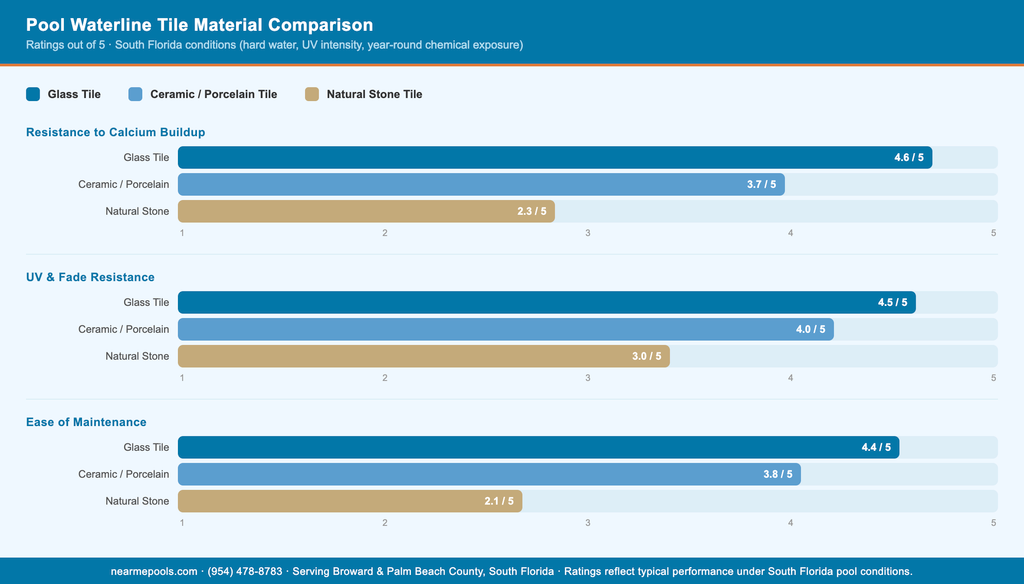
Choosing the right material matters: glass tile offers the best combination of aesthetics and calcium resistance for South Florida conditions; ceramic and porcelain are durable workhorses with a wide style range; natural stone brings elegance but demands more maintenance. Whatever you choose, professional installation is the deciding factor between tile that lasts two decades and tile that starts popping off in two years.
If your pool’s tile has been on your mind, it’s probably been telling you something.
Ready to Think It Through?
Whether you’re replacing tile on its own or as part of a larger renovation, the details matter — and the decisions you make now affect how the pool looks and performs for the next 15–20 years.
If you’d like to talk through what your project might involve, reach out to the team at Near Me Pools — we’re happy to help you think through the options and ask the right questions before you hire anyone. You can also give us a call at (954) 478-8783 or email us at contact@nearmepools.com.
FAQ
How long does pool waterline tile last?
Well-installed, high-quality tile in a properly maintained pool can last 15–25 years. In South Florida’s conditions — hard water, intense UV, year-round chemical exposure — the lower end of that range is more common unless the pool water chemistry is consistently managed. Glass and dense porcelain tend to hold up longer than more porous materials.
Can individual pool tiles be replaced without doing the whole waterline?
Yes, spot repairs are possible when damage is isolated to a few tiles and the surrounding tile and adhesion are otherwise sound. The challenge is matching the existing tile exactly — colors and patterns from older installations may no longer be available. If mismatches are acceptable or unavoidable, spot repair is a reasonable option. Widespread or systemic tile failure usually warrants a full replacement.
Does pool tile replacement require draining the pool?
At minimum, the pool needs to be lowered to expose the waterline band — typically about two to three feet below the normal water level. For full waterline replacement including steps and spa, a full or near-full drain is usually required. Your contractor will confirm the specific approach based on your pool’s layout.
What causes pool tile to fall off?
The most common causes are adhesive failure (the bond between the tile and the pool shell breaks down over time), water infiltrating behind the tile and degrading the substrate, and improper installation — wrong adhesive type, poor surface prep, or grout that wasn’t sealed. In South Florida, calcium buildup that forces its way into grout lines over years can also compromise the installation from behind.
Is glass tile worth the extra cost for a pool waterline?
For many South Florida homeowners, yes — particularly those in hard-water areas of Broward County. Glass tile’s non-porous surface resists calcium buildup far better than more absorbent materials, which means less maintenance effort over time. Aesthetically, the light-reflection quality of glass tile at a pool waterline is difficult to replicate with any other material. The higher upfront cost is often offset by lower long-term maintenance and a longer useful life.
How do I know if my waterline tile just needs cleaning or actually needs replacing?
A good rule of thumb: if a professional acid wash or calcium removal treatment restores the tile to acceptable condition, cleaning may be sufficient for now. If the tile’s glaze is pitting or flaking, if tiles are cracking or pulling away from the wall, or if cleaning reveals that the underlying tile surface is compromised, replacement is the more cost-effective long-term path. An experienced pool professional can evaluate which situation you’re in fairly quickly.