

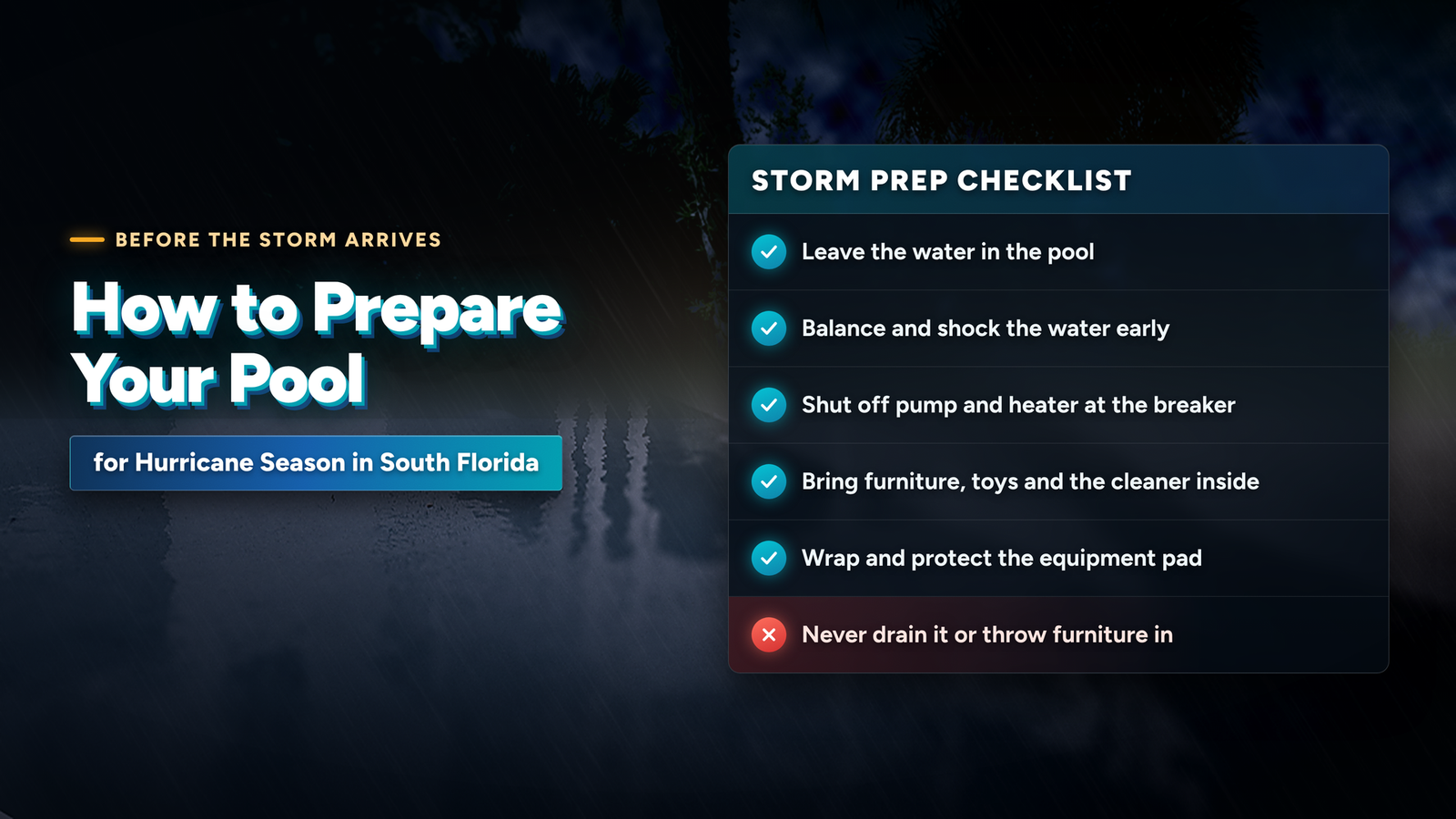
It’s May in South Florida. The weather is beautiful, the pools are clear, and hurricane season is three weeks away. You still have time to get ahead of it — but not much.
Every year, pool owners scramble after a storm passes: murky green water, debris-clogged filters, equipment that won’t start, chemistry that’s completely off. Almost all of that is preventable. Knowing how to prepare your pool for hurricane season — and what to do immediately after a storm — can be the difference between a two-day recovery and a two-week headache.
Here’s the full picture…
Why Storms Hit Pools Hard
Most homeowners are focused on their house when a storm is coming: windows, furniture, generator, water supply. The pool feels like a low priority — it’s outside, it’s already full of water, what’s the worst that could happen?
Quite a bit, actually. Heavy rain dilutes your pool chemistry fast, dropping pH, alkalinity, and chlorine in hours. Debris loads up organic material the water has to fight. If the power goes out and your pump stops, you lose circulation — and a warm, unfiltered, nutrient-rich pool in South Florida heat is a perfect environment for algae to take hold overnight. A pool that was clear on Tuesday can be actively green by Friday.
The other issue is equipment. Surge damage, debris ingestion, and improper shutdown are the most common causes of post-storm equipment failures — and most of them are completely avoidable.
Before the Storm: Your Hurricane Pool Prep Checklist
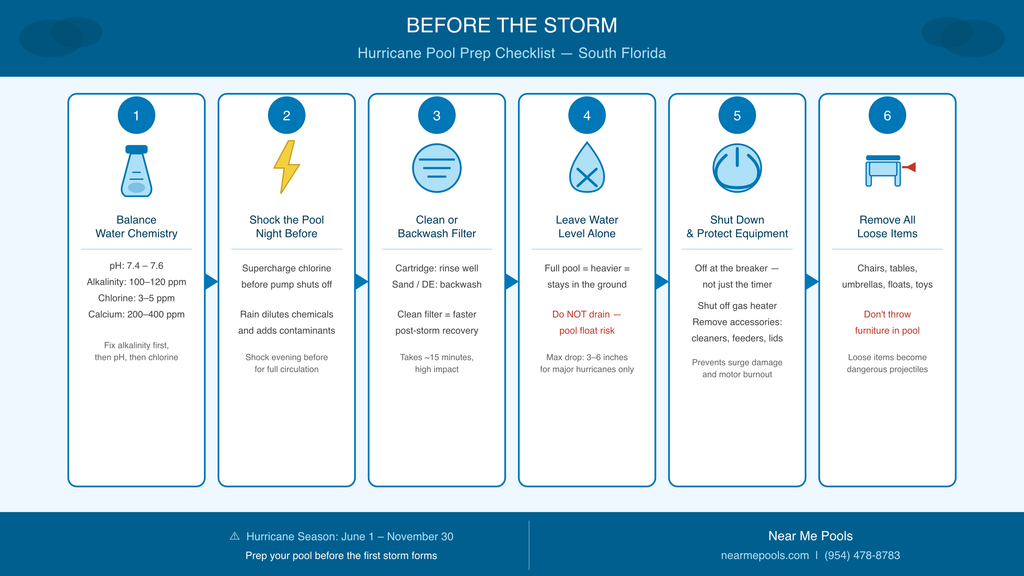
Step 1: Balance Your Water Chemistry First
Before you do anything else, test and balance your pool chemistry. You want the water in a tight, stable window going into the storm because there’s a real chance your pump will be offline for anywhere from 12 hours to several days. Balanced water holds up significantly better during that downtime.
Target ranges to hit:
- pH: 7.4–7.6
- Total Alkalinity: 100–120 ppm
- Free Chlorine: 3–5 ppm (aim for the higher end)
- Calcium Hardness: 200–400 ppm
Step 2: Shock the Pool the Night Before
A pre-storm shock treatment supercharges your chlorine level before the pump shuts off. Rain carries organic contaminants — pollen, fertilizer runoff, bird droppings, airborne debris — and it dilutes your existing chemical levels in real time. Going into a storm with elevated chlorine gives the water a fighting chance while circulation is offline.
Shock the evening before the storm if timing allows. This gives the chemicals a full circulation cycle before the power goes out. If you’d rather have a professional handle this and make sure the chemistry is exactly right, the team at Near Me Pools offers weekly pool maintenance across Broward and Palm Beach County and can make sure you’re fully prepared heading into storm season.
Step 3: Clean or Backwash Your Filter
A clean filter before the storm means a faster recovery after it. You’ll be filtering out leaves, debris, and everything else that blew in — a clogged filter from the start makes that job much slower and puts extra strain on the pump.
Cartridge filter: rinse it thoroughly. Sand or DE filter: backwash it. This takes about 15 minutes and is one of the highest-leverage things you can do before a storm.
Step 4: Leave Your Water Level Alone
This is the most common mistake South Florida pool owners make before a hurricane. The instinct is to lower the water level to make room for rain. In most cases, don’t do it.
A full pool is heavier, and that weight keeps the pool shell properly seated in the ground. An empty or partially drained pool — especially a fiberglass pool — can actually lift out of the ground when the surrounding soil becomes waterlogged with rainwater. This is called “pool float,” and it’s a catastrophic structural failure that costs tens of thousands of dollars to fix.
For most tropical storms and Category 1–2 events, leave your water level exactly where it is. For a direct hit from a major hurricane, you can drop it 3–6 inches at most — no more.
Step 5: Shut Down and Protect Your Equipment
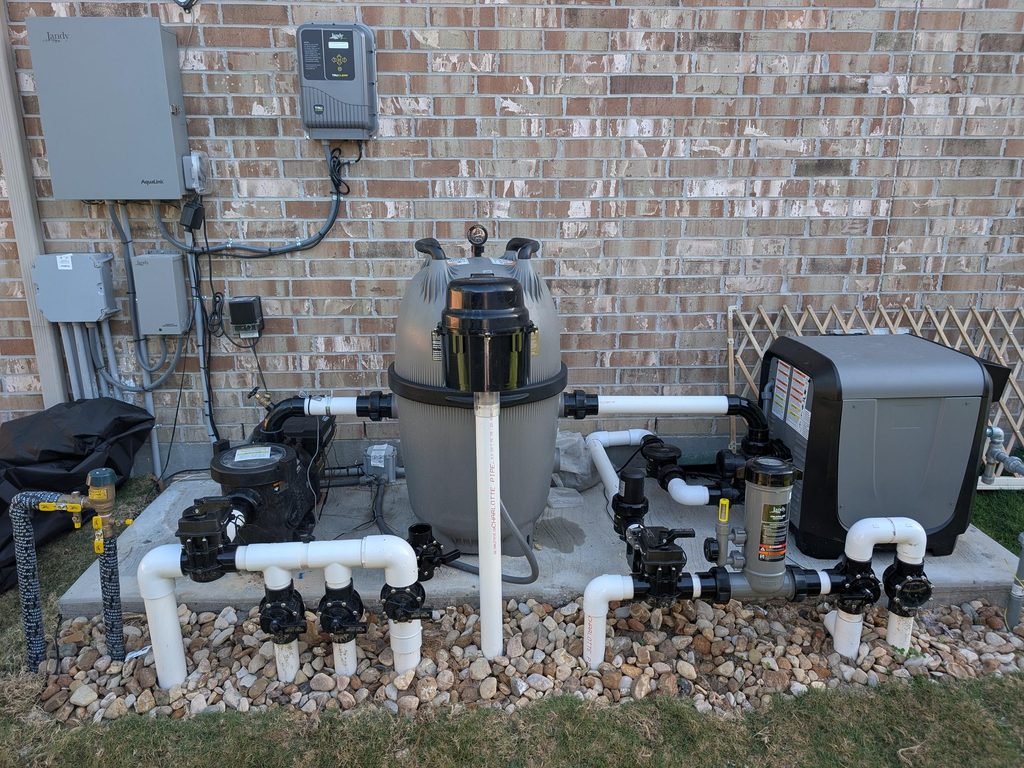
Your equipment is built to get wet. It’s not built to run through flying debris or absorb power surges unprotected.
Here’s what to do before the storm arrives:
- Turn off all equipment at the breaker — not just the timer. This protects against surge damage and prevents the pump from trying to run if power flickers during the storm.
- Shut off the gas supply to any pool heater.
- Remove detachable accessories and bring them inside: automatic pool cleaners, solar blankets, floating chlorinators, skimmer lids that aren’t secured.
- Put automation systems in service mode or manually override to the off position.
You don’t need to physically remove the pump or filter. They’re anchored and designed to handle rain. Just make sure they’re properly shut down and protected from surge and debris.
Step 6: Clear the Pool Area of Everything Loose
Anything that can become airborne in 80+ mph winds needs to come out of the pool area before the storm: chairs, umbrellas, tables, pool toys, noodles, floats, nets, and anything else sitting on the deck or in the enclosure.
And one thing to avoid: don’t throw your patio furniture into the pool. This is an old myth that does real damage — furniture legs can chip or crack pool surfaces, and the organic material from cushions and straps adds a massive chemical load to the water. Bring it inside or store it in a garage.
After the Storm: Getting Your Pool Back
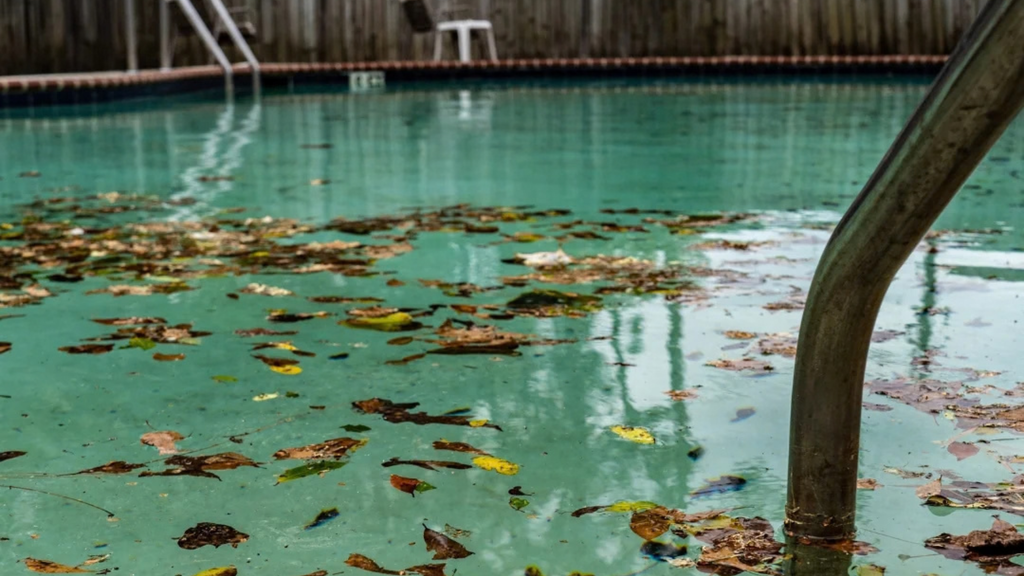
Safety Check — Do This Before Anything Else
- Check for downed power lines anywhere near the pool, deck, or equipment pad. If you see any, stay well away and call your utility company. Do not approach the water.
- Inspect the equipment pad for visible damage, flooding, or debris impact before switching anything on.
- Look for large debris in the pool (tree branches, fence sections) — assess how you’ll extract them before you start pulling things out. Dragging heavy debris across a pool finish can cause real surface damage.
When in doubt, wait.
Remove Debris Before It Sinks
Speed matters here. The faster you get organic debris out of the water, the less your chemicals have to fight. Use a leaf net (wider and deeper than a standard skimmer net) to pull out floating debris before it settles on the bottom.
Once the surface is clear, vacuum the bottom. If there’s a significant amount of fine silt or dirt, vacuum to waste — bypass the filter and discharge the dirty water rather than circulating it back through the system.
After vacuuming, run your pump continuously for at least 24 hours to turn the water over completely.
Rebalance Your Chemistry — In the Right Order
Rain wrecks pool chemistry fast. Even a moderate tropical storm can knock pH, alkalinity, and chlorine well outside their safe ranges within hours. Here’s the sequence to get it back:
- Test first. Get a full panel reading before adding anything — alkalinity, pH, chlorine, and calcium hardness.
- Adjust alkalinity first. If it’s below 80 ppm, bring it up to the 100–120 range before touching anything else.
- Adjust pH next. Once alkalinity is stable, nudge pH into the 7.4–7.6 window.
- Shock the pool. Only after pH and alkalinity are in range — chlorine is significantly less effective in acidic or unbalanced water, and adding it out of order wastes product and doesn’t solve the problem.
- Run the pump and retest after 24 hours. You may need a second round of adjustments, especially after a heavy storm.
If the pool has already turned green, expect to repeat the shock treatment multiple times over 2–3 days while running the pump around the clock. Brush the walls daily — algae clings to surfaces and brushing exposes it to the circulating chlorine.
The Short Version
Pre-storm: balance your chemistry, shock it the night before, clean the filter, leave the water level alone, shut down your equipment at the breaker, and clear the deck. Post-storm: do a safety check first, pull debris out fast, and rebalance chemistry in order (alkalinity → pH → chlorine). Do it right and most pools are back to normal in 2–4 days. Skip the prep and you’re looking at a week or more — sometimes longer if algae takes hold.
The good news is that South Florida pools are built for this climate. They’ve been here through hundreds of storm seasons. A little preparation goes a long way.
Near Me Pools Is Ready When Storm Season Starts
If managing storm prep and post-storm recovery isn’t something you want on your plate, Near Me Pools serves Broward County and parts of Palm Beach County — and we’re used to what South Florida storms do to pools. Whether it’s getting your chemistry dialed in before a storm or getting your water back to clear afterward, we can handle it.
Check out our pool maintenance and cleaning service, or reach out to our team directly. You can also call us at (954) 478-8783 or email contact@nearmepools.com — we’re happy to take a look and give you a straight answer.
Frequently Asked Questions
Should I drain my pool before a hurricane?
No — don’t drain your pool before a storm. An empty or nearly empty pool can “float” out of the ground when the surrounding soil becomes saturated with rainwater. This is especially common with fiberglass pools and can cause severe, expensive structural damage. Leave the water level where it is, or drop it no more than 3–6 inches if a major hurricane is on a direct path toward you.
Should I cover my pool during a hurricane?
For most pool owners, no. Standard vinyl or mesh pool covers aren’t rated for hurricane-force winds, and a cover that comes loose mid-storm can cause serious damage to the pool and surrounding property. Anchored safety covers with a verified wind rating may be acceptable — check the manufacturer’s specs. When in doubt, leave the pool uncovered.
Can I run my pool pump during a hurricane?
No. Turn off your pump and all automated pool equipment at the breaker before the storm arrives. Running the pump during a storm risks surge damage, and debris can clog the intake while it’s running and burn out the motor. Shut everything down and restart it once the storm has fully passed and you’ve confirmed the equipment is undamaged.
How long does it take to recover a pool after a hurricane?
With proper pre-storm prep, most pools are fully recovered in 2–4 days. Without prep — or if algae has already taken hold — recovery can take a week or more and may require multiple shock treatments and extended pump run time. The faster you remove debris and rebalance chemistry after the storm, the faster the recovery.
What should I do if my pool turns green after a storm?
Test first, then work in order: alkalinity, then pH, then shock. Brush the pool walls and floor daily, and run the pump continuously. For a deep green pool, expect to repeat shock treatments over 2–3 days. If you’re not seeing meaningful improvement after 72 hours of treatment, reach out to a local pool service — sometimes a professional assessment catches a filter issue or chemical imbalance that’s stalling the recovery.