

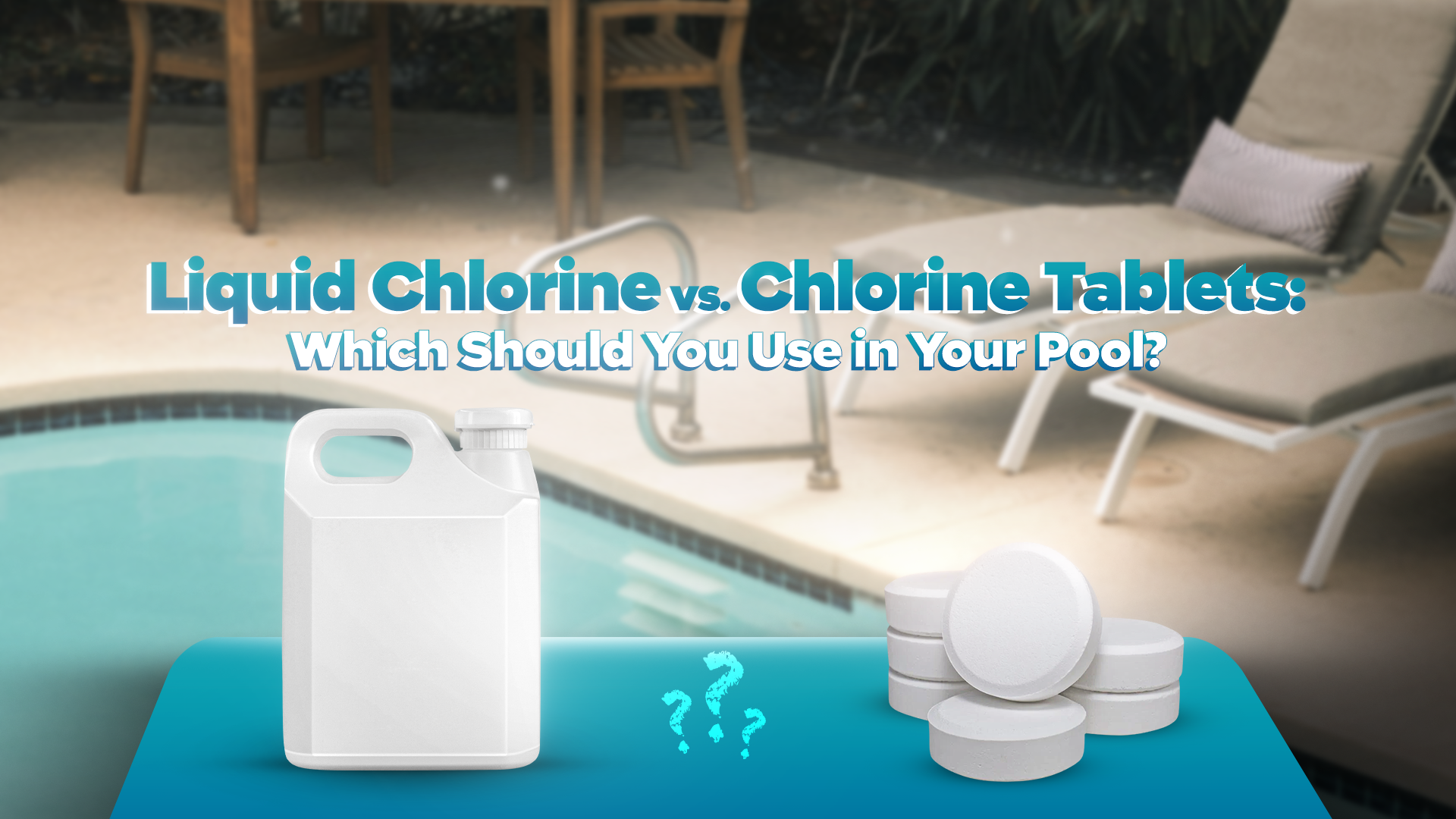
When it comes to keeping your pool clean, the debate between liquid chlorine and chlorine tablets is one that never seems to end. If you’ve searched online for the best way to sanitize your pool water, you’ve likely seen dozens of different opinions. The truth is — both products work, but they serve slightly different purposes. The right choice depends on your pool setup, maintenance routine, and even your local weather conditions.
At Near Me Pools, we maintain hundreds of pools across Broward and Palm Beach County, and this is one of the most common questions our clients ask. So, let’s break down the differences, pros, and cons — and help you decide which chlorine type is right for your pool.
What Chlorine Does for Your Pool
Before comparing, it’s important to understand chlorine’s role. Chlorine sanitizes your pool by breaking down and neutralizing:
- Bacteria and viruses
- Organic contaminants (like sunscreen, sweat, or leaves)
- Algae spores and buildup
The key difference between products isn’t what they do — but how they deliver chlorine and what byproducts they leave behind.
Option 1: Liquid Chlorine (Sodium Hypochlorite)
What It Is
Liquid chlorine is a strong, fast-acting sanitizing solution made from sodium hypochlorite, the same active ingredient found in household bleach — just in a higher concentration (10–12%). It’s added directly to the pool water, instantly dispersing throughout.
Pros of Liquid Chlorine
- Immediate Results – No need to wait for tablets to dissolve; sanitizes quickly.
- No Stabilizer Added – It doesn’t contain cyanuric acid (CYA), giving you better control over stabilizer levels.
- Great for Shock Treatments – Perfect for clearing up algae or cloudy water after storms.
- No Calcium Buildup – Won’t affect your pool’s calcium hardness.
Cons of Liquid Chlorine
- Short Shelf Life – It loses potency after a few months, especially if stored in heat.
- Requires Frequent Dosing – Needs to be added regularly, often several times per week.
- Can Slightly Raise pH – Must monitor and balance with acid if necessary.
- Storage & Handling – Heavy and potentially messy if not handled properly.
When Liquid Chlorine Works Best
- For pools with high stabilizer levels (CYA above 70 ppm)
- During hot months when you need more frequent sanitation
- For pool owners who monitor chemistry weekly or biweekly
- As part of a professional maintenance routine (like our pool cleaning services)
Option 2: Chlorine Tablets (Trichlor or Dichlor)
What They Are
Chlorine tablets are slow-dissolving sanitizers that typically contain trichloroisocyanuric acid (Trichlor) or sodium dichloroisocyanurate (Dichlor).
They’re compact, easy to handle, and typically added through a floater, chlorinator, or skimmer basket.
Pros of Chlorine Tablets
- Convenient & Low Maintenance – Easy to add, dissolves slowly over time.
- Perfect for Vacation Periods – Keeps chlorine levels steady while you’re away.
- Dual Function – Sanitizes and adds stabilizer (CYA), which helps protect chlorine from UV breakdown.
- Cost-Effective for Smaller Pools – One tablet can last several days.
Cons of Chlorine Tablets
- CYA Buildup Over Time – Every tablet adds stabilizer; too much can make chlorine ineffective.
- Can Lower pH – Trichlor is acidic and can reduce total alkalinity if not balanced.
- Slower to Dissolve – Doesn’t work fast for shock treatments or major cleanups.
- Can Damage Surfaces if Misused – Never place tablets directly in the pool or on the surface — they can cause bleaching or etching.
When Chlorine Tablets Work Best
- For busy homeowners who want minimal maintenance
- In smaller or shaded pools where CYA buildup is slower
- During short-term use or as vacation maintenance
- For seasonal or rental pools that are periodically drained
Head-to-Head Comparison: Liquid vs. Tablets
| Feature | Liquid Chlorine | Chlorine Tablets |
|---|---|---|
| Form | Liquid (sodium hypochlorite) | Solid (trichlor or dichlor) |
| Speed of Action | Immediate | Slow-dissolving |
| Stabilizer (CYA) Added | None | Yes |
| Effect on pH | Slightly raises pH | Lowers pH |
| Ease of Use | Requires manual dosing | Simple, automated options |
| Shelf Life | Short | Long |
| Cost per Use | Low-to-moderate | Low |
| Long-Term Control | Excellent | Can cause CYA issues |
| Ideal User | Active pool owners or pros | “Set-it-and-forget-it” homeowners |
Understanding Stabilizer (CYA): The Hidden Factor
One of the biggest differences between these two options comes down to cyanuric acid (CYA) — the chemical stabilizer that prevents chlorine from burning off under the Florida sun.
- Liquid chlorine adds no CYA → giving you flexibility and precise control.
- Chlorine tablets add CYA with every use → eventually causing a chemical imbalance if you don’t drain and refill your pool periodically.
When CYA levels get too high (above 80–100 ppm), chlorine becomes far less effective. You might see:
- Cloudy or green water despite high chlorine readings
- Algae growth returning quickly
- Constant need for shock treatments
If this sounds familiar, switching to liquid chlorine or a professional maintenance plan might be your best long-term solution.
Cost and Efficiency Over Time
Let’s look at real-world usage for a 15,000-gallon pool in South Florida:
| Expense | Liquid Chlorine | Chlorine Tablets |
|---|---|---|
| Average Monthly Cost | $40–$60 | $25–$40 |
| Extra Maintenance Needed | pH balancing | CYA reduction or partial drain |
| Long-Term Chemical Control | High | Moderate |
| System Automation | Requires manual dosing or feeder | Easy to automate |
| Long-Term Water Quality | Consistent | Declines with high CYA |
While tablets might appear cheaper up front, the cost of draining and refilling water due to CYA buildup often evens out the difference — especially in areas like Broward and Palm Beach where water is expensive.
Our Recommendation: Balance Convenience with Chemistry
At Near Me Pools, we recommend a hybrid approach for most South Florida pools:
- Use chlorine tablets for baseline sanitization — especially during vacations or consistent weather.
- Incorporate liquid chlorine treatments periodically to keep stabilizer levels balanced.
- Regularly test CYA, pH, and chlorine — or let our technicians handle it as part of your pool maintenance plan.
This approach combines the convenience of tablets with the chemical control of liquid chlorine — keeping your water safe, clear, and efficient all year.
When to Call the Professionals
If you notice:
- A strong chlorine smell (often from combined chloramines)
- Algae returning soon after shock treatments
- Rapid pH fluctuations or stubborn stains
- Waterline calcium buildup
…it’s time to bring in a professional.
Our expert technicians at Near Me Pools can test your water chemistry, adjust sanitizers, and rebalance your pool system for long-term stability.
Final Thoughts
Choosing between liquid chlorine and chlorine tablets isn’t about which one is “better” — it’s about which one fits your lifestyle and pool’s needs.
- Want low maintenance? Tablets may be your best friend.
- Want precise control and long-term efficiency? Go with liquid chlorine.
- Want the best of both worlds? Alternate or let professionals manage both in balance.
Whatever route you choose, remember that consistent maintenance and proper testing matter far more than the chlorine type itself.
Let Near Me Pools Handle the Chemistry for You
Tired of guessing which product is right or how much to use?
Our licensed technicians handle pool cleaning, chemical balancing, and equipment maintenance for homeowners throughout Broward and Palm Beach counties.
📞 Call us today at (954) 478-8783
or
🌐 Visit nearmepools.com to schedule your service.
Your pool should be effortless — we’ll make sure it stays that way.