

You’re staring at your backyard pool and something’s clearly off. Maybe the surface feels rough underfoot and the plaster is peeling. Maybe the deck looks like it hasn’t been touched since the 90s. Maybe the tile along the waterline is chipped and outdated, and the whole thing just looks tired.
So you start searching: pool renovation. Pool resurfacing. Pool remodel. And quickly realize these terms are being used almost interchangeably — which doesn’t help when you’re trying to figure out what you actually need and how much it involves.
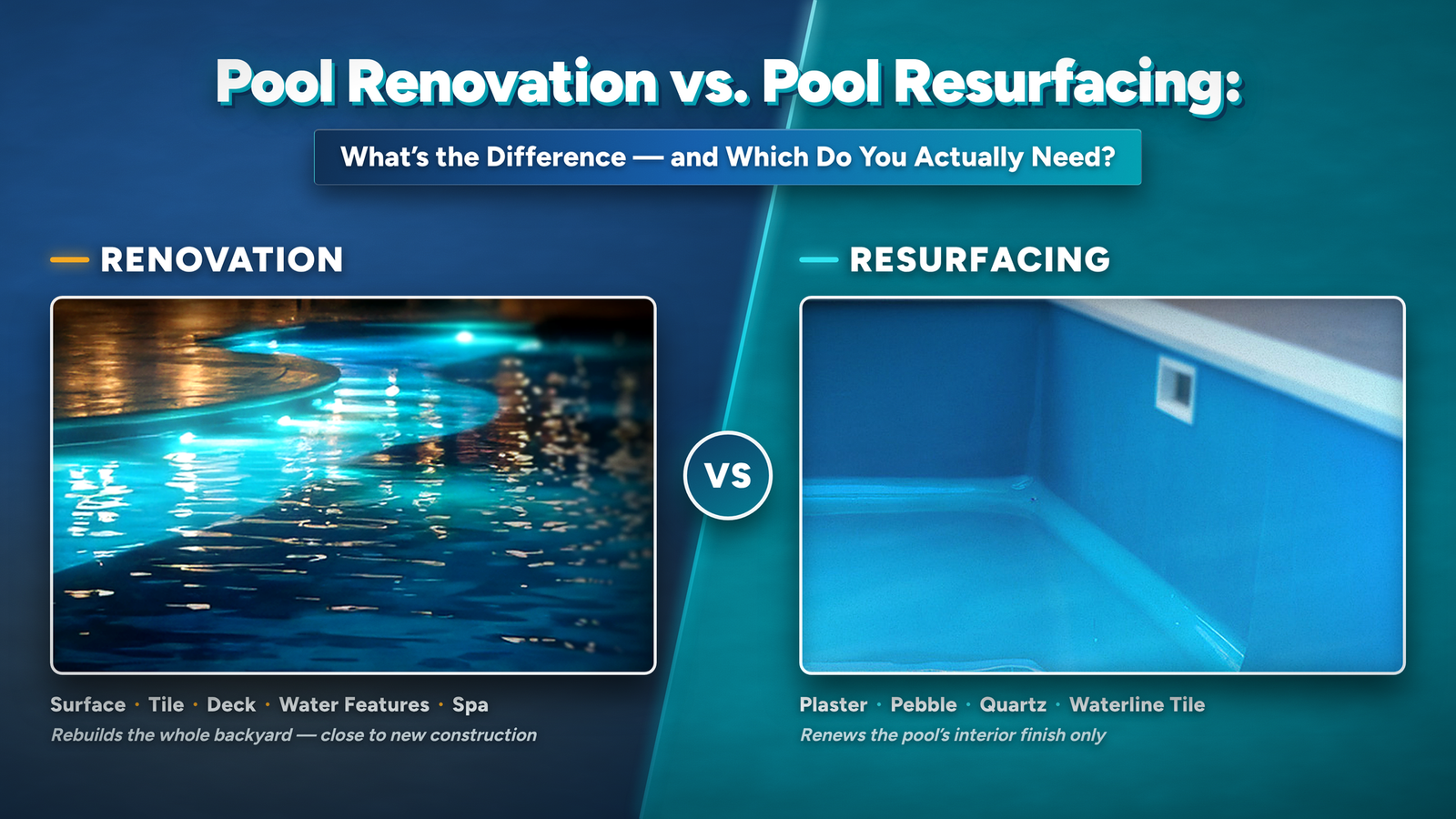
Here’s the short answer: pool resurfacing and pool renovation are related but very different projects. One is about the interior surface of the pool. The other is about transforming the entire pool area — deck, tile, water features, and beyond. Confusing them can lead to getting the wrong scope of work, dealing with the wrong contractors, or worse — fixing one thing while ignoring others that are equally overdue.
This guide breaks it all down clearly so you can walk into any conversation with a contractor already knowing what you’re talking about.
What Is Pool Resurfacing?
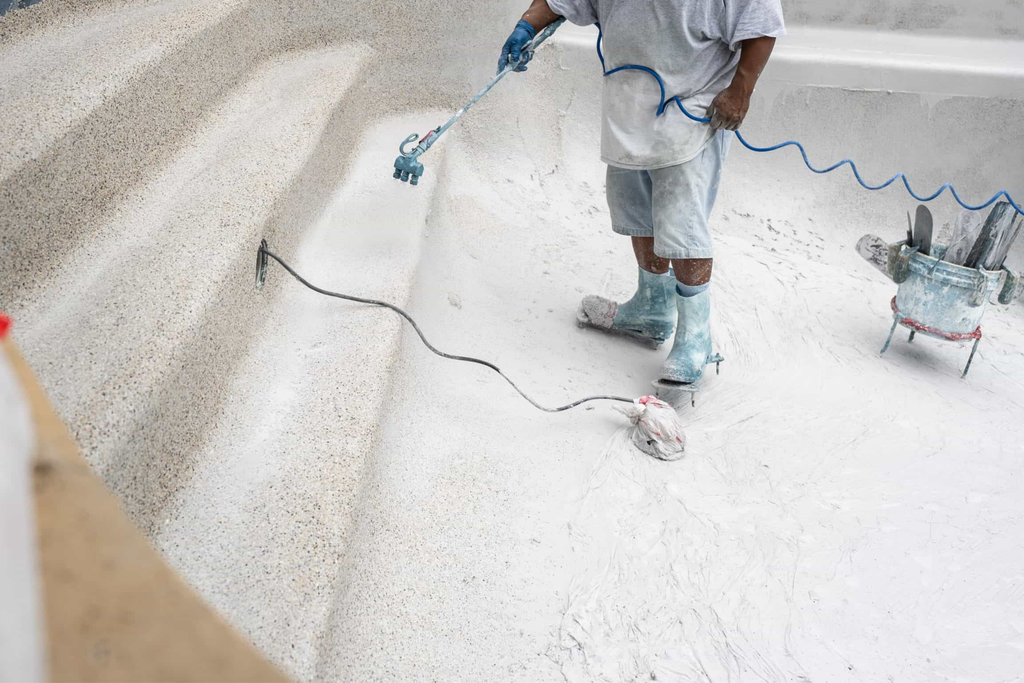
Pool resurfacing refers specifically to replacing or recoating the interior finish of your pool — the surface that lines the shell and comes in direct contact with the water.
Over time, pool surfaces wear out. Plaster chalks, stains, and develops rough patches. Aggregate finishes lose their texture. In South Florida especially — where pools are used year-round, exposed to intense UV, and treated with chemicals continuously — interior surfaces tend to need replacing every 10 to 15 years depending on the finish type.
Common Pool Interior Finishes
The material you choose for your new interior surface makes a significant difference in look, feel, durability, and maintenance:
- White plaster (marcite) — The original and most affordable option. Smooth surface, but tends to stain and roughen faster than other finishes.
- Quartz aggregate (e.g., Diamond Brite) — Quartz mixed into the plaster for added durability and texture. Mid-range in price, popular across South Florida for its balance of cost and longevity.
- Pebble finishes (e.g., Pebble Tec, Pebble Fina) — Natural pebbles embedded in the surface. Highly durable, distinctive look, slightly textured underfoot. Premium option.
When you’re getting a resurfacing quote, the contractor should be walking you through finish options, draining the pool, applying the new surface, and managing the water chemistry startup process during the cure period.
Resurfacing is a focused, well-defined project. The pool shell stays the same. The equipment stays the same (unless something also needs replacing). The deck and tile stay the same. It’s interior work — nothing more, nothing less.
What Is Pool Renovation?
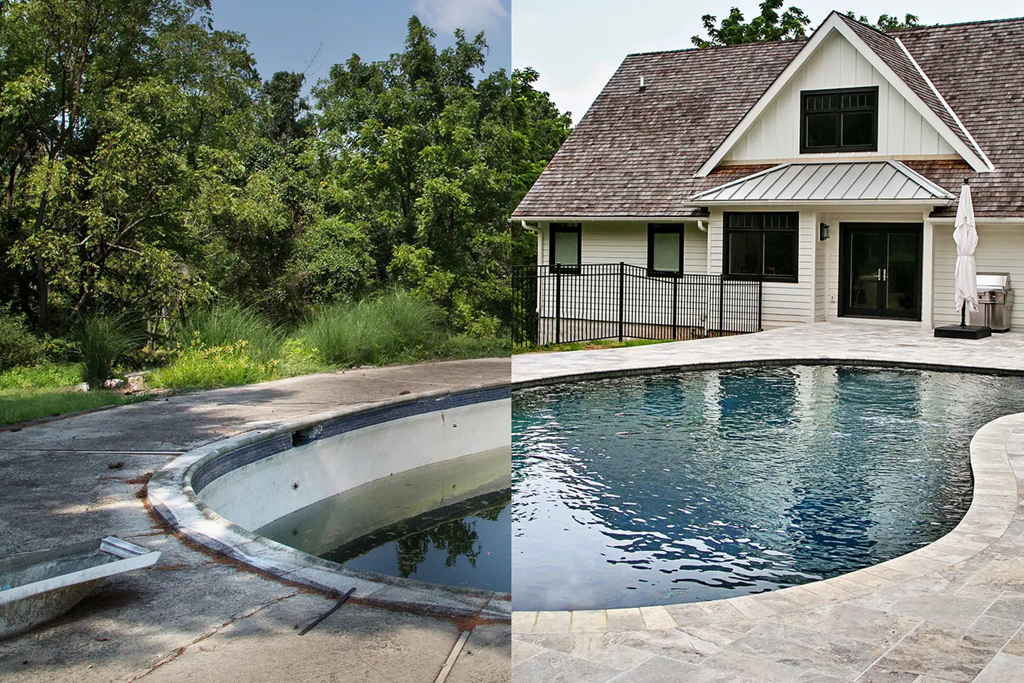
Pool renovation is the broader term — and it can mean almost anything that goes beyond the interior surface. Think of it as upgrading or transforming the pool and its surrounding area, not just recoating the inside.
A renovation can include one element or many. It might be limited to the deck. It might be a full overhaul combining a new surface, new waterline tile, a rebuilt deck, and a water feature addition all rolled into one project. The scope is what defines whether something is a renovation — not the price tag.
What Renovation Projects Typically Cover
Pool deck renovation: Replacing, resurfacing, or upgrading the surface surrounding the pool. Deck options range from classic cool deck (the textured, heat-reflective coating common in older Florida homes) to travertine, concrete pavers, porcelain tile, and stamped concrete. In South Florida, deck renovations are often driven by heat, surface deterioration, or wanting to modernize a dated look.
Waterline tile replacement: The tile band running around the perimeter of the pool at the waterline is both functional and aesthetic — it protects the pool structure at the surface-to-air transition zone and takes a lot of wear from chemicals, water fluctuation, and sun. When tile starts cracking, falling off, or just looks outdated, replacing it is a renovation project.
Water features: Adding or rebuilding waterfalls, sheer descents, bubblers, fountains, or grottos. These can be added to an existing pool without rebuilding the entire structure, though they do require plumbing and electrical work.
Full pool remodels: The all-in project — new interior surface, new deck, new tile, new water features, potentially equipment upgrades, sometimes even reshaped steps or tanning ledges. This is the transformation that takes a tired, 20-year-old pool and turns it into something that looks like it was installed this year.
| Resurfacing | Renovation | |
|---|---|---|
| What changes | Interior pool surface only | Deck, tile, water features, or full pool area |
| Who does it | Pool resurfacing contractor | Licensed pool renovation/remodeling contractor |
| Permits typically required | Rarely | Often, especially for structural changes |
| Pool downtime | 1–2 weeks typically | Several weeks to months depending on scope |
| Best for | Surface wear, staining, or aging plaster | Dated aesthetics, deck/tile issues, desired upgrades |
How to Tell Which One You Actually Need
This is where most homeowners get stuck — and honestly, sometimes the answer is both. But here’s a practical way to think through it:
Start with what’s actually bothering you
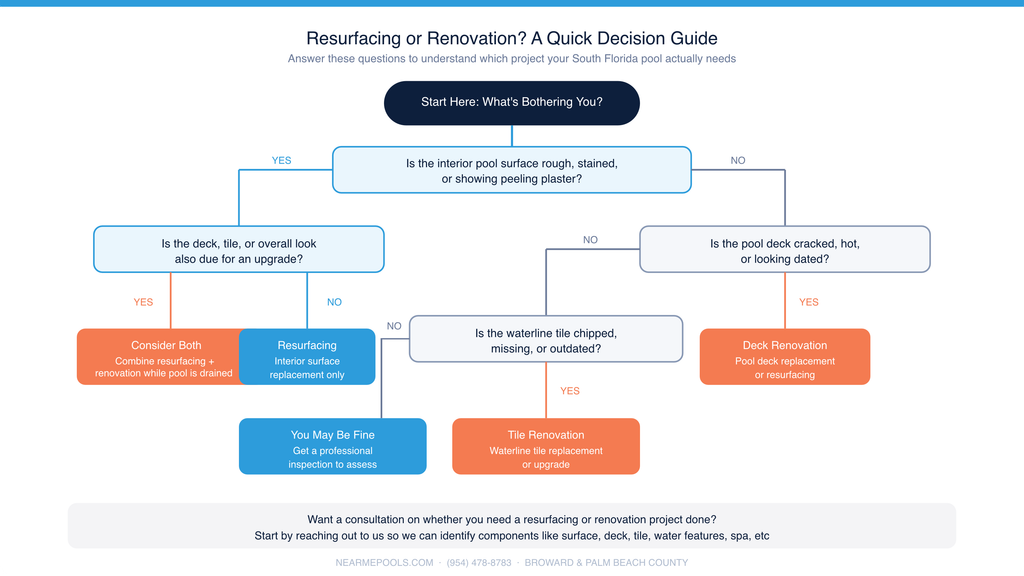
If the problem is the surface of the pool itself — the plaster feels rough, there’s staining that doesn’t respond to treatment, cracks are appearing in the interior, or the surface just looks gray and worn — resurfacing is likely what you need. The structure is fine; the interior finish has reached the end of its life.
If the problem is the deck — cracked, stained, too hot to walk on, or simply dated — that’s a deck renovation, which has nothing to do with the pool’s interior surface. These are two completely separate scopes of work.
If the problem is the tile — missing tiles, cracked tiles, outdated tile that’s clearly from the early 2000s — that’s a waterline tile replacement project, which again can be done independently of resurfacing.
If you’re looking to transform the whole thing — not just fix a specific problem, but genuinely modernize the look and feel of your backyard pool — a renovation conversation makes sense. It might combine a new surface with a new deck and updated tile, all done together while the pool is already drained and the contractors are already on site.
Ask yourself: is this a repair or a transformation?
Resurfacing is fundamentally a repair and maintenance decision — the pool surface has worn out and needs to be replaced. It’s not cosmetic; it’s functional.
Renovation is fundamentally a lifestyle and aesthetic decision — you want the pool to look, feel, or function differently than it does today.
That’s not a hard rule, but it’s a useful starting point when you’re trying to describe what you need.
When It Makes Sense to Do Both at the Same Time
Here’s one of the most practical pieces of advice in this guide: if your pool is already getting drained and the surface is being replaced, it’s worth evaluating the deck and tile at the same time.
The reason is simple. A significant portion of renovation work happens while the pool is empty. Contractors are already on site. The disruption is already happening. Tacking on a waterline tile replacement or a deck resurfacing at the same time is almost always more efficient — and less expensive — than coming back for a second project six months later.
South Florida homeowners who are already facing a resurfacing project often discover during the planning process that their deck is also showing its age — and vice versa. This is worth thinking through proactively. Get eyes on the full picture before locking in a scope.
A Note on Timing in South Florida
The renovation and resurfacing calendar in South Florida is different from most of the country. Because pools are used year-round, there’s no true “off season” — which means you’ll generally face competition for contractor availability at almost any time of year.
That said, late fall through early spring tends to see more renovation activity, as homeowners want their pools ready for winter use and spring entertaining. Summer — hurricane season aside — often sees slightly shorter booking windows.
The practical takeaway: if you know you’re heading toward a resurfacing or renovation project, start the planning process earlier than you think you need to. Conversations with contractors, permit applications (if applicable), and material lead times all add up.
Summary
Pool resurfacing and pool renovation are related but not the same thing. Resurfacing is about the interior surface of the pool — it’s maintenance and repair for a finish that’s reached the end of its life. Renovation is broader — it covers the deck, the tile, the water features, or any combination of changes that transform the pool area beyond the surface.
Most homeowners who need resurfacing don’t necessarily need a full renovation. But many who are already facing a resurfacing project discover it’s an ideal time to address the deck and tile at the same time. Understanding where the two projects overlap — and where they differ — helps you walk into contractor conversations with clarity.
The right starting point is an honest look at what’s actually bothering you: Is the surface worn? Is the deck the problem? Is it a combination? That answer shapes the conversation from there.
Whether you’re in the early research phase or already comparing contractor quotes, it helps to have someone in your corner who knows South Florida pools and can help you sort through what you’re actually looking at. The team at Near Me Pools is happy to talk it through — no pressure, no pitch, just a straight conversation. Reach out by calling us at (954) 478-8783, or email contact@nearmepools.com.
Frequently Asked Questions
Is pool resurfacing part of a pool renovation?
It can be. A full pool renovation often includes a new interior surface as one component of the broader project. But resurfacing on its own — just replacing the interior finish without touching the deck, tile, or features — is its own standalone project. The two aren’t synonymous.
How do I know if my pool needs resurfacing or full renovation?
Start by identifying what’s actually giving you trouble. If the issue is the pool’s interior surface — rough texture, staining, aging plaster — resurfacing is likely the right scope. If the deck, waterline tile, or overall aesthetics are the problem, renovation may be the better conversation. If everything is showing its age at once, it might be worth evaluating a combined project.
Can I resurface a pool and renovate the deck at the same time?
Yes — and this is often the most efficient approach. Since the pool needs to be drained for resurfacing, you can simultaneously address the deck and tile without scheduling a second round of disruption. Many South Florida homeowners opt for this approach when multiple elements are due for an upgrade.
How long does pool resurfacing take vs. a full renovation?
Resurfacing typically takes 1–2 weeks from drain to refill and chemical startup. A renovation project’s timeline depends heavily on scope — a waterline tile replacement might add a few days, while a full deck rebuild and water feature installation could stretch the project to several weeks or even a couple of months.
Do I need permits for pool resurfacing?
Generally, no. Interior resurfacing of an existing pool typically doesn’t require permits. Renovation work — especially deck modifications, structural changes, or the addition of water features — often does. Your contractor should clarify permit requirements upfront based on the specific scope of your project.
What questions should I ask a contractor before deciding between resurfacing and renovation?
Start with these: What’s the condition of my existing deck and tile, and should I be thinking about those too? What permits will be required for this scope? What’s the realistic timeline? Who is performing the work — and what licenses do they hold? Getting clear answers to these questions early saves a lot of headaches later. The Near Me Pools contact page is a good starting point if you want a local perspective before making any decisions.
Serving Broward County and parts of Palm Beach County — see our full service area.