

You’ve done the research. You know your pool needs resurfacing — the surface is rough, the plaster is stained, and no amount of brushing or acid washing is going to fix what’s underneath. Now comes the part most homeowners find harder than diagnosing the problem: actually finding the right contractor to do the job.
Pool resurfacing is a significant investment. It’s also work that you won’t be able to undo cheaply if it’s done wrong. The contractor matters — not just the material, not just the price.
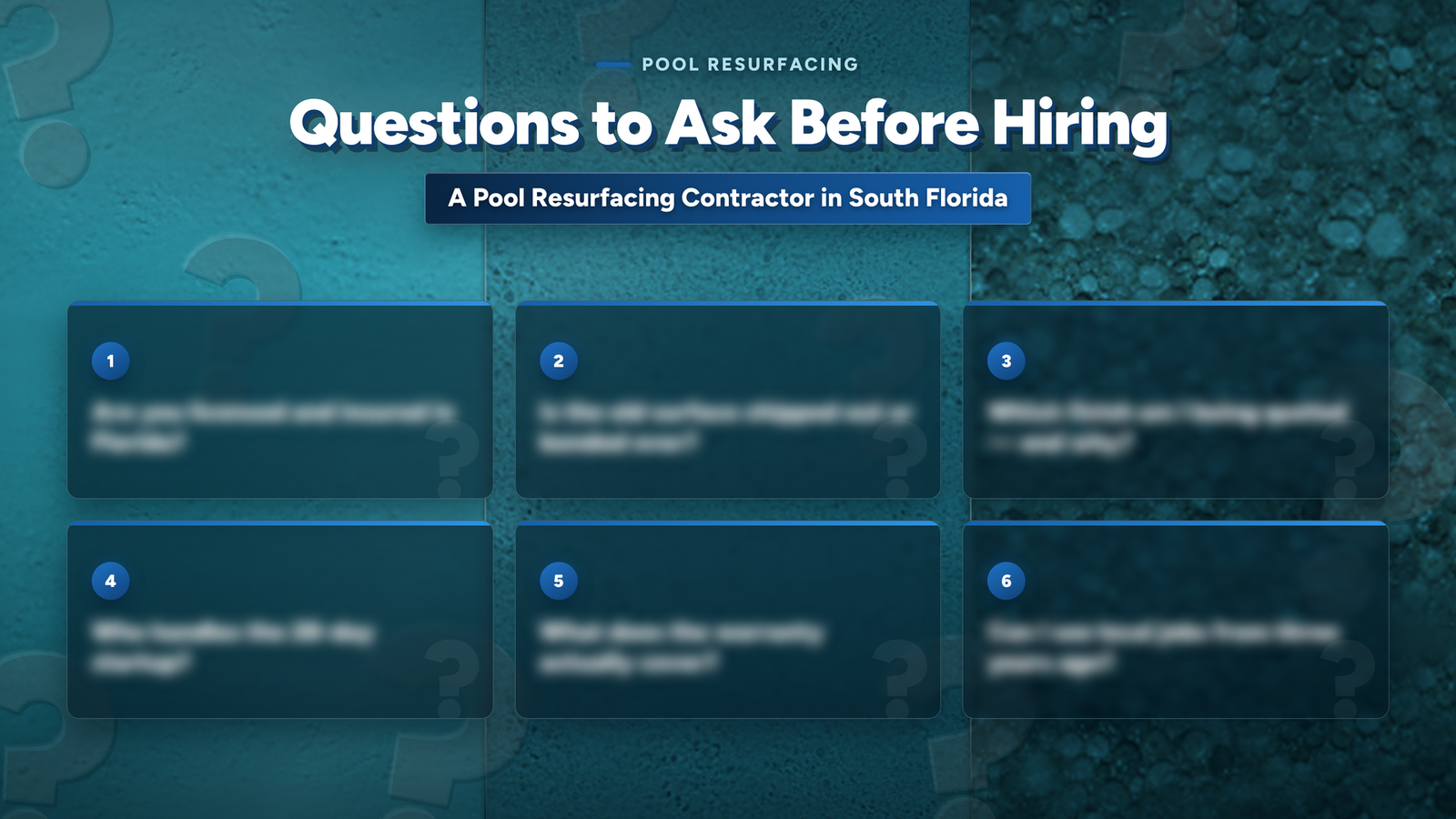
The good news is that asking the right questions upfront is how you separate the experienced professionals from the ones who’ll leave you with a spotty finish, a voided warranty, and a pool full of water chemistry headaches. Here’s what to ask — and what the answers should sound like.
Why the Right Questions Matter More Than the Lowest Quote
It’s tempting to gather three quotes, pick the middle one, and call it a day. But resurfacing contractors aren’t all working from the same playbook. The difference between a quality job and a poor one often comes down to surface preparation, material quality, and the crew’s experience with South Florida’s specific conditions — hard water, intense UV, and pools that are used year-round.
A contractor who cuts corners on surface prep can leave you with a finish that blisters, peels, or stains within a year or two. A contractor who doesn’t address water chemistry properly after the job can leave you with mineral deposits baked into a brand-new surface before you’ve even swum in it once.
The questions below are designed to surface those details before you sign anything.
Questions to Ask About Experience
How long have you been resurfacing pools in South Florida specifically?
General experience matters. South Florida experience matters more. Pools in Broward and Palm Beach County deal with conditions that accelerate surface wear — hard water from the Biscayne Aquifer, extreme UV intensity, year-round use that gives the surface no seasonal rest, and salt water systems that are increasingly common in the area.
A contractor who primarily works in the Panhandle or outside Florida may not have the same familiarity with how local water chemistry interacts with certain finishes over time. Look for someone with real, local track record.
Do you carry liability insurance?
If the job damages your equipment, decking, or landscaping, liability coverage is what protects you.
Ask for certificates of insurance, not just a verbal “yes.” A legitimate contractor will have no hesitation providing it for you.
Can you share references from recent resurfacing projects in the area?
References from the last 12–18 months are the most meaningful. Ask if you can see a finished job in person — or at minimum, photos. South Florida pools are in public view from backyards, so some contractors can arrange for a quick look at completed work if a past client is willing.
When you call references, ask one question beyond the basics: “Is the surface still holding up, and would you hire them again?”
Questions to Ask About the Materials and Finish
What finish options do you offer?
A qualified contractor should be able to walk you through the options clearly: plaster, quartz-blend finishes like Diamond Brite or Florida Stucco, and pebble finishes like Pebble Tec. They should explain the differences in durability, texture, maintenance, and lifespan — not just hand you a color chart.
If a contractor only pushes one option without discussing your pool’s age, your water type, or how long you plan to stay in the home, that’s worth noting. A good contractor helps you pick the right finish for your situation, not just the one that’s most convenient for them to install.
If you want to brush up on the differences before your conversations, our breakdown of pool resurfacing options and surface types can help you walk in prepared.
What brand of materials do you use, and where do they source them?
Diamond Brite, Florida Stucco, Pebble Tec — these are established, recognized brands with consistent quality standards. Some contractors use generic or off-brand aggregates that look similar but don’t carry the same manufacturer warranties or track record.
Ask specifically what brand, what product line, and whether it comes with a manufacturer warranty. Then verify that the warranty is valid — some manufacturer warranties are only honored if the product is installed by a certified applicator.
What does your warranty cover, and for how long?
Most reputable contractors offer a workmanship warranty in addition to the manufacturer’s material warranty. These are separate things — the material warranty covers the product itself, the workmanship warranty covers how it was installed.
Ask what each covers, what voids them, and what the process looks like if you have an issue. Get the warranty in writing before signing.
Questions to Ask About the Process
What does your surface preparation process look like?
This is where the quality of a resurfacing job is actually determined — not in the material, not in the final coat. Surface preparation involves chipping away old plaster, grinding down rough spots, patching cracks and divots, and ensuring the underlying shell is structurally sound and properly bonded.
A contractor who glosses over this step or can’t describe it clearly is cutting corners. Press them: “How do you handle old plaster removal? What do you do if you find cracks or delamination underneath?”
How long will the job take, start to finish?
For a typical residential pool, draining, surface prep, application, and initial curing typically takes 5–10 business days depending on pool size, surface condition, and weather. But “start to finish” also depends on scheduling, material delivery, and crew availability.
Ask for a realistic timeline in writing — not a best-case estimate — and ask what would cause delays. South Florida weather, particularly during summer storm season, can push schedules. A good contractor factors that in.
What do you do about water chemistry after the job?
This is a question many homeowners forget to ask, and it matters significantly. Freshly applied aggregate finishes go through a startup curing period where water chemistry has to be managed carefully — incorrect pH, alkalinity, or calcium levels during the first 30 days can cause permanent staining or mineral deposits in the new surface.
Ask whether the contractor handles startup chemistry, whether they walk you through it, or whether they expect you to manage it independently. If they hand you a generic sheet and disappear, that’s a gap.
Questions to Ask About the Quote Itself
What exactly is included in this price?
A resurfacing quote should itemize clearly: surface prep, materials (by product name and type), labor, disposal of old plaster, and any permit fees. If the quote is a single lump sum, ask them to break it down. Surprises at the end of a job are almost always rooted in a quote that was vague at the start.
What’s the payment schedule?
A standard, reputable payment structure looks something like: a deposit at contract signing, potentially a progress payment at a defined project milestone, and the final balance upon completion and your approval. Just make sure to set that clear between both parties, so that you both agree on how things will be paid up.
What would cause the price to change?
Resurfacing quotes are based on what the contractor can see before draining the pool. Once the pool is drained and old plaster is removed, sometimes surprises appear — significant cracks, delaminated sections, or structural issues that require additional work before the new surface can be applied.
Ask how they handle this: “If you find something unexpected once the pool is drained, how do you communicate that, and how is additional work priced?” A trustworthy contractor will have a clear process for this — not a blank check.
Red Flags to Watch For
Some things are worth walking away from, regardless of price:
- Quotes significantly lower than all others — this usually signals corners being cut somewhere in materials or prep
- Pressure to sign immediately — legitimate contractors don’t need to rush you
- Vague or verbal-only answers — anything that should be in writing (warranty, scope, schedule) and isn’t
- No references or refusal to provide them
- Can’t name the brand or product line they’re using
None of these are dealbreakers in isolation if there’s a good explanation. But several in combination? Trust your instincts.
Green Flags That Signal a Trustworthy Contractor
On the flip side, here’s what a confident, experienced resurfacing contractor typically looks like:
- Carries proof of insurance and provides certificates when asked
- Walks you through finish options clearly and asks about your priorities before recommending one
- Has local references — and pictures of past projects
- Describes the surface prep process in detail without being prompted
- Provides a written, itemized quote
- Explains the startup water chemistry process and either handles it or walks you through it
- Has a clear, fair payment schedule
What You Know Now
Hiring a pool resurfacing contractor isn’t complicated — but it does reward preparation. The homeowners who come out of it happiest are the ones who did a little homework first: asked about surface prep, got the warranty in writing, and didn’t let price alone make the decision.
In South Florida especially, you want someone who knows local water chemistry, understands how UV and heat affect finish longevity, and has a track record of jobs that held up. That combination is worth more than the lowest bid.
Frequently Asked Questions
Should I get multiple quotes before hiring a pool resurfacing contractor?
Yes — three quotes is a reasonable baseline. Beyond price, use the process of getting quotes to compare how contractors communicate, how clearly they explain the process, and whether they’re asking questions about your pool before recommending a finish. A contractor who gives you a price before seeing your pool in person should raise an eyebrow.
What’s a fair payment structure for pool resurfacing?
Most legitimate contractors work on a deposit-at-signing, milestone-payment, balance-on-completion structure. Final payment should only happen once you’ve inspected the work and are satisfied.
How long does pool resurfacing take in South Florida?
Most residential pools are completed in 5–10 business days from drain to full cure, though the pool may be ready to refill sooner. Surface prep and application typically take 2–4 days; the remaining time accounts for refilling and managing the initial startup chemistry period. Weather, pool size, and surface condition all affect the timeline.
What questions should I ask about the warranty?
Ask for both the material warranty (from the manufacturer — typically 10–25 years depending on the finish) and the workmanship warranty (from the contractor — typically 1–5 years). Ask what voids each warranty, what the claims process looks like, and whether the contractor is a certified applicator for the products they’re using. Get all of it in writing before signing the contract.